

Plastic Fenders: 5 essential benefits for vehicles, trailers, and boats. Enjoy durable, impact-resistant, low-maintenance protection for lasting performance.
Plastic fenders are durable, lightweight panels made from HDPE, ABS, or polypropylene. They protect vehicles, trailers, boats, and heavy equipment from debris, mud, and minor impacts. Unlike metal, plastic fenders resist corrosion and absorb shocks, making them low-maintenance and reliable.
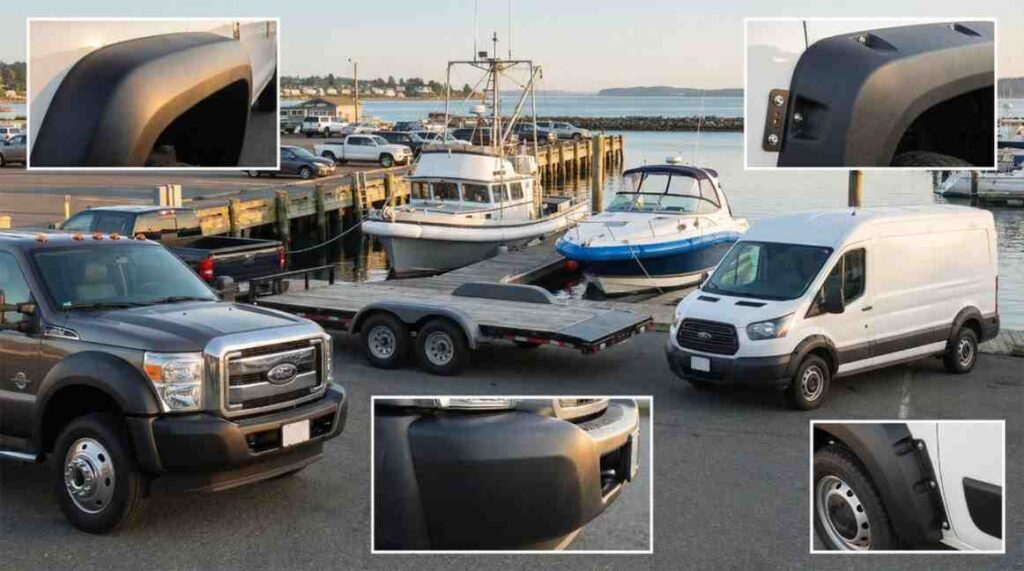
Types and Uses
| Type of Plastic Fender | Use / Description |
|---|---|
| Automotive Fenders | Front and rear fender liners or flares protect wheel wells from rocks, mud, and road spray. |
| Trailer Fenders | Single and dual axle fenders safeguard tires and frames; often come with universal mounting brackets. |
| Marine Fenders | Made of HDPE or polyethylene; absorb impact between boats and docks and resist saltwater corrosion and UV damage. |
| Heavy Equipment Fenders | Protect loaders, graders, and industrial machinery from dirt, debris, and minor impacts. |
Applications
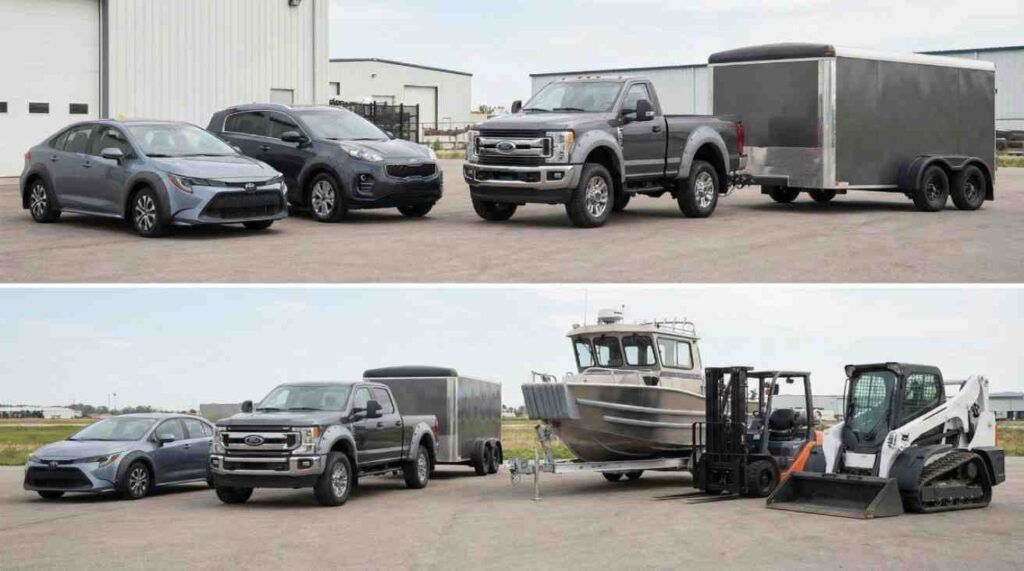
- Plastic fenders used on cars, trucks, SUVs, and trailers.
- Act as buffers and provide wear protection in marine and industrial settings.
- Shield wheels, axles, and frames from debris, mud, and minor impacts.
- Highly versatile across vehicles, marine vessels, heavy machinery, and industrial equipment.
Benefits
- Lightweight, corrosion-resistant, and impact-absorbing protection.
- Low-maintenance and UV-stable, reducing upkeep.
- Extend lifespan of vehicles, trailers, marine vessels, and industrial equipment.
- Durable, flexible, and weather-resistant, making them cost-effective.
FAQ – Plastic Fenders
Q1: Are plastic fenders better than metal?
A: Yes, they are lighter, corrosion-resistant, and impact-absorbing, offering reliable protection compared to metal.
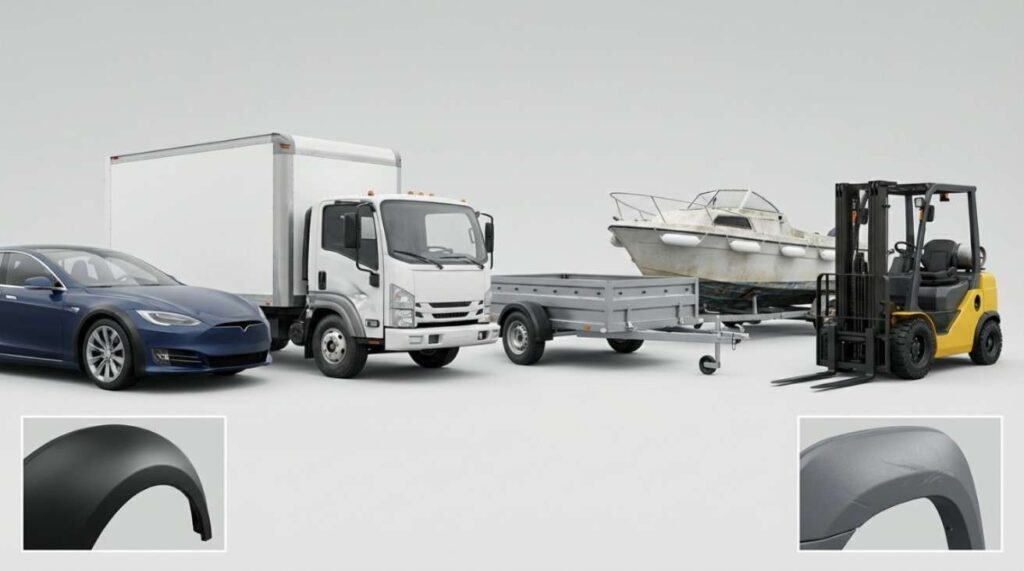
Q2: Can they be used on trailers and boats?
A: Yes, they protect tires, frames, and hulls from debris, mud, and minor impacts.
Q3: What materials are used for plastic fenders?
A: HDPE, ABS, polypropylene, and TPO provide durability, flexibility, and UV resistance.
Conclusion
Plastic fenders deliver durability, flexibility, and low-maintenance protection, making them a superior alternative to metal. Understanding their types, applications, and benefits ensures long-lasting protection for vehicles, trailers, marine vessels, and heavy equipment.


