
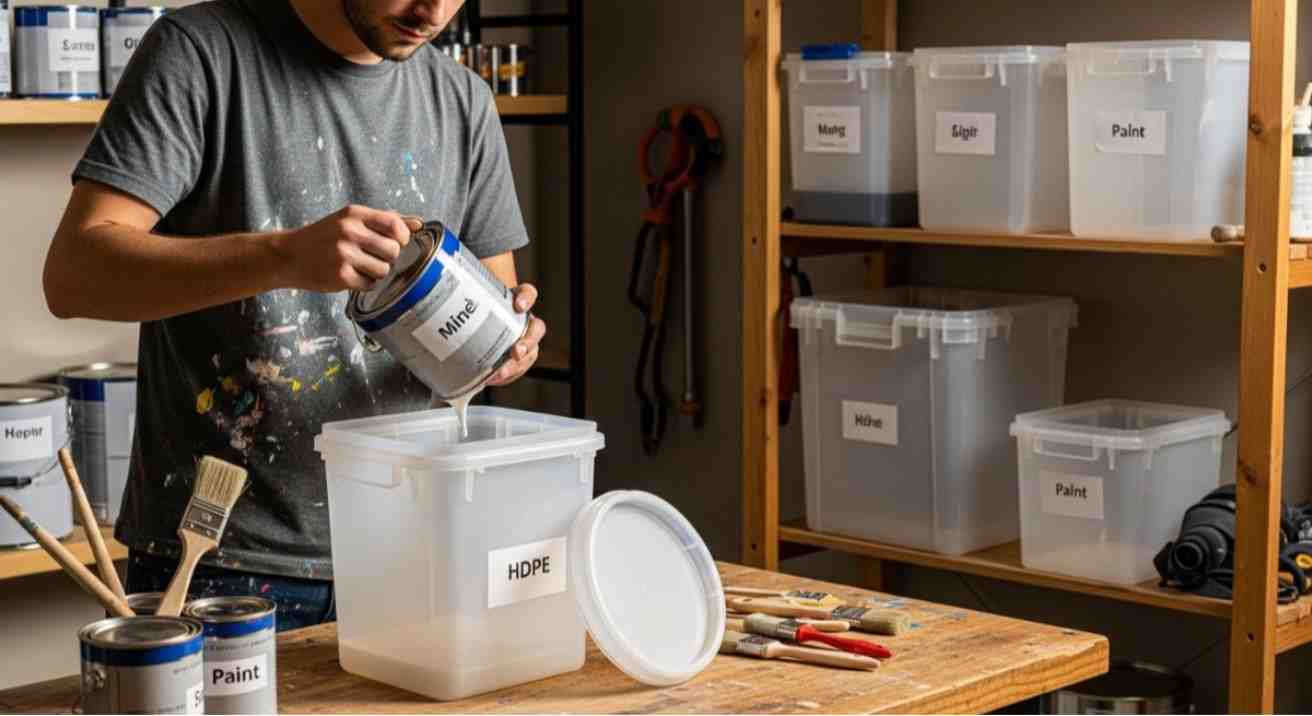
Yes, you can store paint in a plastic container if it is airtight and paint-safe. Proper sealing prevents drying, leaks, and contamination.
Introduction
Yes—when it comes to leftover paint, the question ‘can you store paint in a plastic container’ has a clear answer: only for specific kinds.. However, only certain types of paint are suitable for plastic storage. Latex and other water-based paints can be safely kept in airtight plastic containers, while oil-based paints should always remain in metal cans. Proper leftover paint storage prevents waste, maintains color consistency, and extends paint shelf life for future use. The key is selecting the right plastic material, such as HDPE or polypropylene, and storing it in a cool, dry place away from heat and sunlight to keep your paint fresh and reusable.

How to Store Paint Safely
If you’re wondering how to store paint safely or can you store paint in a plastic container, follow these expert-backed steps to keep your leftover paint in perfect condition:
1. Choose the Right Plastic Container
Use HDPE or polypropylene plastic containers they’re durable, chemical-resistant, and ideal for latex or water-based paints. Avoid thin or food-grade plastics that can warp or leak.
2. Prepare the Paint Before Storing
Stir the paint thoroughly to mix the pigments evenly. Transfer it carefully into the container and fill it almost to the top to reduce air exposure air causes paint to thicken or form a skin layer.
3. Seal and Label Properly
Wipe the rim clean and close the lid tightly to create an airtight seal. Label each container with the paint color, brand, finish, and date so it’s easy to identify later.
4. Store in the Right Environment
Keep containers in a cool, dark, and dry place ideally between 60–80°F (15–27°C). Avoid sunlight, moisture, or freezing temperatures, which can damage the paint and shorten paint shelf life.
5. Separate Oil-Based Paints
Never store oil-based paints in plastic; always keep them in metal cans to prevent chemical reactions or softening of the plastic.
Benefits and Drawbacks of Storing Paint in Plastic Containers
| Aspect | Benefits of Storing Paint in Plastic Containers | Drawbacks of Storing Paint in Plastic Containers |
|---|---|---|
| Affordability | Plastic containers are cheaper and easily available, making them great for short-term paint storage. | Low-quality plastics can crack or warp, leading to paint leaks. |
| Weight & Handling | Lightweight and portable, ideal for small DIY or touch-up jobs. | May not provide the same airtight seal as metal cans over time. |
| Durability | HDPE containers resist rust and corrosion, unlike metal. | Prolonged exposure to heat or UV rays can weaken plastic. |
| Environmental Impact | Reusable and recyclable if handled properly. | Not ideal for long-term oil-based paint storage due to chemical reactions. |
Best Way to Store Paint
When thinking about the best way to store paint, especially if you’re wondering can you store paint in a plastic container, follow these proven methods to preserve paint quality and extend its life:
1. Use High-Quality Containers
Opt for HDPE or thick polypropylene containers for water-based paints. These materials are durable, chemical-resistant, and ideal for safe paint storage.
2. Ensure an Airtight Seal
Always wipe the rim and close the lid tightly. A proper seal keeps air and moisture out, preventing the paint from thickening or spoiling.
3. Label Everything Clearly
Write down the paint type, color code, and storage date on each container. This avoids confusion during future touch-ups.
4. Store in a Controlled Environment
Keep containers in a cool, dark, and dry area — ideally between 60°F and 80°F (15–27°C). Avoid direct sunlight, humidity, and freezing temperatures.
5. Check Paint Condition Periodically
Open and stir the paint every few months to ensure it hasn’t dried out or separated. If the paint smells bad or looks lumpy, it’s time to discard it safely.
Common Mistakes to Avoid When Storing Paint in Plastic Containers
| Mistake | Why It’s a Problem | Expert Tip |
|---|---|---|
| Using low-quality plastic | Thin or food-grade plastics can crack, leak, or react with paint chemicals, causing spoilage. | Always use HDPE or sturdy polypropylene containers for safe paint storage. |
| Leaving too much air in the container | Air exposure leads to paint drying, thickening, or forming a skin layer. | Fill the container almost full and seal it tightly to minimize air contact. |
| Storing paint in direct sunlight or heat | High temperatures or UV rays break down paint composition and weaken the plastic. | Keep containers in a cool, dry, and shaded space. |
| Mixing old and new paint | Different batches may clump or separate, affecting color consistency and finish. | Label containers clearly with paint type, color, and date before storing. |
| Storing oil-based paint in plastic | Oil-based paints can dissolve or soften the plastic, leading to leaks and fumes. | Always store oil-based paint in metal cans instead of plastic. |
FAQs
Q1: How long does latex paint last in plastic?
Up to two years if sealed tightly and stored in a cool, dry place.
Q2: Can I store oil-based paint in plastic containers?
No. Always keep oil-based paints in metal cans to avoid container damage.
Q3: Does plastic affect paint quality?
Quality HDPE plastic containers don’t affect latex paint, but avoid cheap, transparent plastics that may react or let light in.
Conclusion
In summary, you can store paint in a plastic container safely when it’s water-based, properly sealed, and stored under controlled conditions. Avoid using plastic for oil-based paints, minimize air exposure, and protect your containers from heat and light. With careful handling, your leftover paint stays smooth, vibrant, and ready for your next project saving both time and money.


