

No, you cannot recycle plastic utensils easily. Read 7 Facts About Can You Recycle Plastic Utensils and discover eco-friendly alternatives to reduce plastic waste.
Introduction
Plastic utensils are everywhere, from restaurants to takeout orders. But can you recycle plastic utensils? The answer is not straightforward.
Some plastics, like polypropylene (#5), are technically recyclable, but their small size and shape make processing difficult. They often fall through sorting machines or get contaminated, leading to inefficiency in recycling facilities.
Most curbside programs don’t accept plastic utensils, so they usually end up in landfills or as litter.Switching to reusable or compostable alternatives, like bamboo or stainless steel cutlery, can significantly reduce environmental impact.
In this guide, we’ll explore the recyclability of plastic utensils, eco-friendly alternatives, and practical tips to reduce plastic waste.
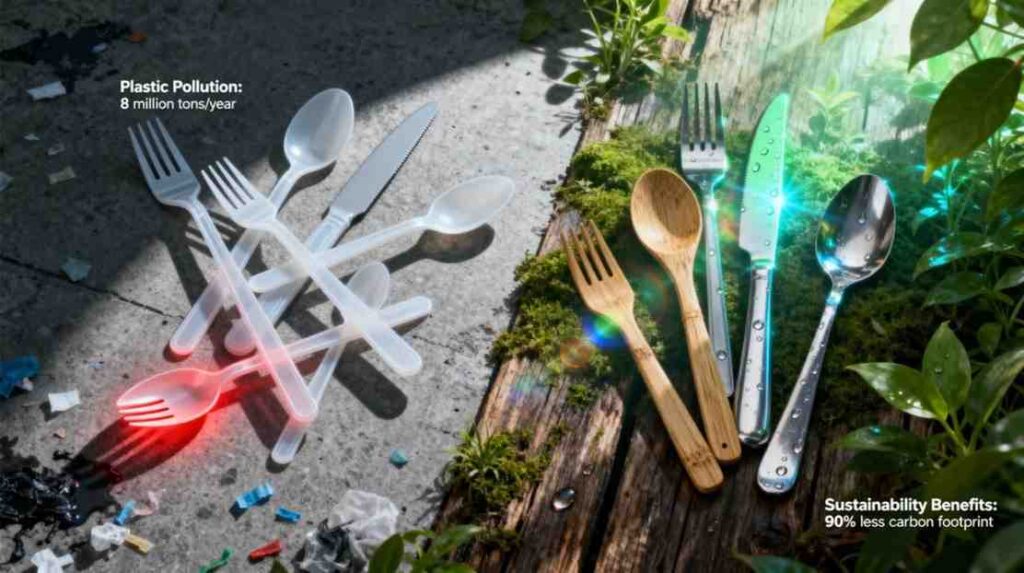
Advantages and Disadvantages of Plastic Utensils
| Advantages | Disadvantages |
|---|---|
| Convenient and widely available for parties, restaurants, and takeout meals. | Mostly non-recyclable, making recycling efforts difficult. |
| Lightweight and easy to store, ideal for travel or outdoor events. | Contribute to plastic pollution, harming the environment. |
| Cheap and disposable, perfect for large gatherings. | Food residues contaminate recycling, reducing efficiency. |
| Hygienic for single-use situations, preventing cross-contamination. | Release microplastics over time, dangerous for wildlife. |
| Can be replaced with eco-friendly alternatives like bamboo, stainless steel, or biodegradable cutlery. | Limited recycling options, often requiring specialized facilities. |
Why Plastic Utensils Are Hard to Recycle
Most disposable plastic utensils, like forks, spoons, and knives, are made from polystyrene or polypropylene, which are very difficult to recycle. This is why the question “can you recycle plastic utensils” often gets a “no” from experts.
Contamination is a major issue. Food residues make recycling inefficient, and utensils are lightweight, fragile, and easily mixed with non-recyclable waste.
Most recycling programs and plastic waste management systems aren’t equipped to handle utensils. Unlike bottles or containers, they cannot be cleaned and processed in bulk efficiently.
While some centers accept #5 polypropylene, plastic utensils remain largely non-recyclable. Switching to eco-friendly alternatives like bamboo or stainless steel is essential to reduce plastic pollution.
Plastic Utensils vs. Sustainable Alternatives
| Plastic Utensils | Sustainable Alternatives |
|---|---|
| Hard to recycle – most cannot be reused. | Reusable cutlery like steel, bamboo, or silicone lasts for years. |
| Cause plastic pollution and harm nature. | Biodegradable utensils made from cornstarch, rice husk, or PLA are safe for the planet. |
| Cheap but wasteful – used once, then thrown away. | Cost-effective in the long run since they can be reused many times. |
| Easily contaminated with food, making recycling harder. | Support zero-waste lifestyle and keep recycling systems cleaner. |
| Add to landfill and microplastic problems. | Eco-friendly choice that protects wildlife and reduces waste. |
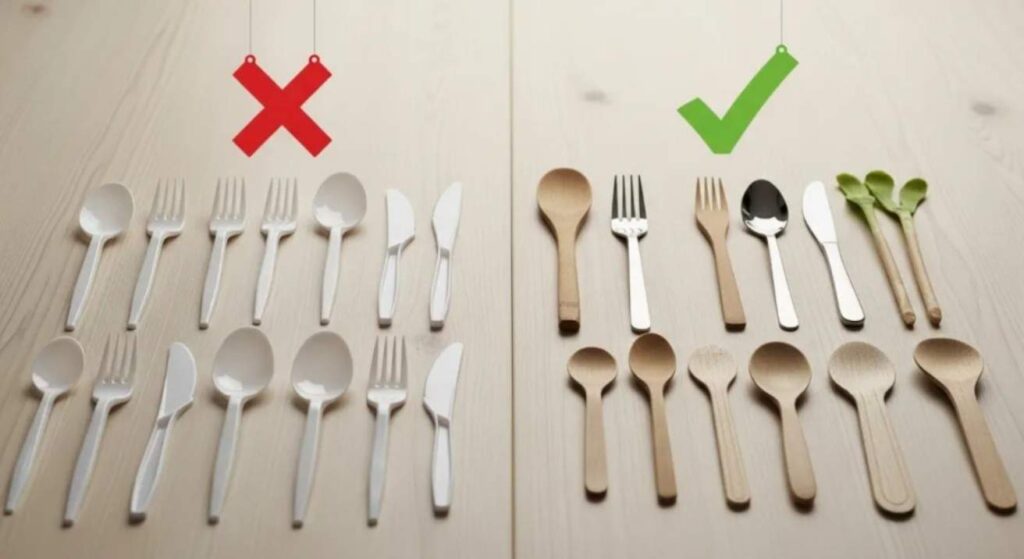
Tips for Reducing Plastic Waste in Daily Life
- Can you recycle plastic utensils? While most cannot be recycled, there are effective ways to minimize plastic waste in daily life.
- Carry reusable cutlery made from stainless steel, bamboo, or silicone whenever you eat out or travel. Opt for eco-friendly alternatives to plastic cutlery and biodegradable utensils to reduce landfill waste.
- Avoid single-use plastics in your kitchen, office, and while ordering takeout. Supporting community recycling programs and local plastic waste reduction initiatives can also make a significant impact.
- Educate friends and family about the limitations of recycling plastic utensils and the importance of a zero-waste lifestyle. Small steps, like using personal reusable utensils or switching to compostable cutlery, help combat plastic pollution and promote sustainable living.

FAQS
Q1: Can you recycle plastic utensils at home?
A: No, most plastic utensils cannot be recycled at home. They are small, often contaminated, and made from materials like polystyrene or polypropylene that recycling facilities cannot process efficiently.
Q2: Are any plastic utensils recyclable?
A: Only some utensils made from #5 polypropylene may be recyclable at specialized facilities. Most curbside programs do not accept forks, spoons, or knives.
Q3: What are eco-friendly alternatives to plastic utensils?
A: Reusable cutlery made from stainless steel, bamboo, or silicone and biodegradable utensils from cornstarch or PLA plastics are great alternatives that reduce plastic waste.
Q4: How can I reduce plastic utensil waste daily?
A: Carry your own reusable utensils, choose biodegradable options, and avoid single-use plastics. Supporting local recycling or waste reduction initiatives also helps.
Q5: Why are plastic utensils harmful to the environment?
A: Plastic utensils contribute to landfill waste and pollution. They can release microplastics that harm wildlife and ecosystems, making sustainable alternatives essential.
Conclusion
Can you recycle plastic utensils? Mostly no. Most disposable forks, spoons, and knives are made from materials like polystyrene or polypropylene, which are difficult to recycle. Food contamination and their small, lightweight nature make them largely non-recyclable in regular programs.
Switching to reusable cutlery made from stainless steel, bamboo, or silicone, or using biodegradable utensils from cornstarch or PLA plastics, is the best solution. Carrying personal reusable utensils and adopting eco-friendly alternatives reduces plastic waste and supports a zero-waste lifestyle.
In short, while recycling plastic utensils is challenging, small daily actions like using sustainable cutlery and avoiding single-use plastics can make a meaningful difference for the environment.