

Can I Put a Plastic Cup in the Microwave? Only if it is microwave-safe and BPA-free. Using the wrong cup can release harmful chemicals.
Can I put a plastic cup in the microwave?
Yes, but only if it’s labeled microwave-safe. Plastic cups made from polypropylene (PP #5) can safely handle microwave heat, while disposable plastics should never be microwaved as they may warp, melt, or release harmful chemicals.
Common Mistakes to Avoid When Microwaving Plastic Cups
| Common Mistake | Why It’s Risky | How to Avoid |
|---|---|---|
| Using non-microwave-safe plastic (PET, PVC, PS) | Can warp, melt, or release chemicals when heated. If you’re asking “can I put a plastic cup in the microwave,” only use labeled safe plastic. | Always check for microwave-safe symbols and recycling codes |
| Old, scratched, or cracked cups | Increases chemical leaching including BPA, phthalates, microplastics | Replace damaged cups and use food-grade, microwave-safe plastic |
| Assuming BPA-free is always safe | Heat can still release other harmful additives | Verify microwave-safe labeling; do not rely solely on BPA-free |
| Overheating liquids | Creates hot spots; can deform plastic or increase chemical release | Heat liquids gradually and stir to even temperature |
| Using disposable cups repeatedly | Not designed for microwave; may soften, leak, or leach chemicals | Use microwave-safe polypropylene, glass, or ceramic cups instead |
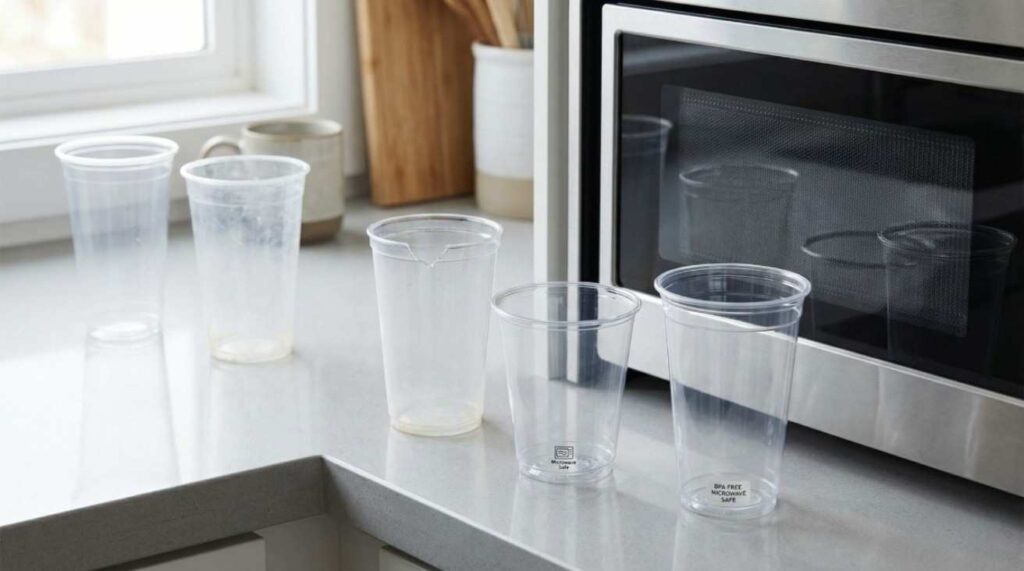
Can I Put a Plastic Cup in the Microwave Safely?
- Depends on Plastic Type: Only certain plastics can handle microwave heat safely.
- Check the Label: Always look for a microwave-safe symbol or recycling code.
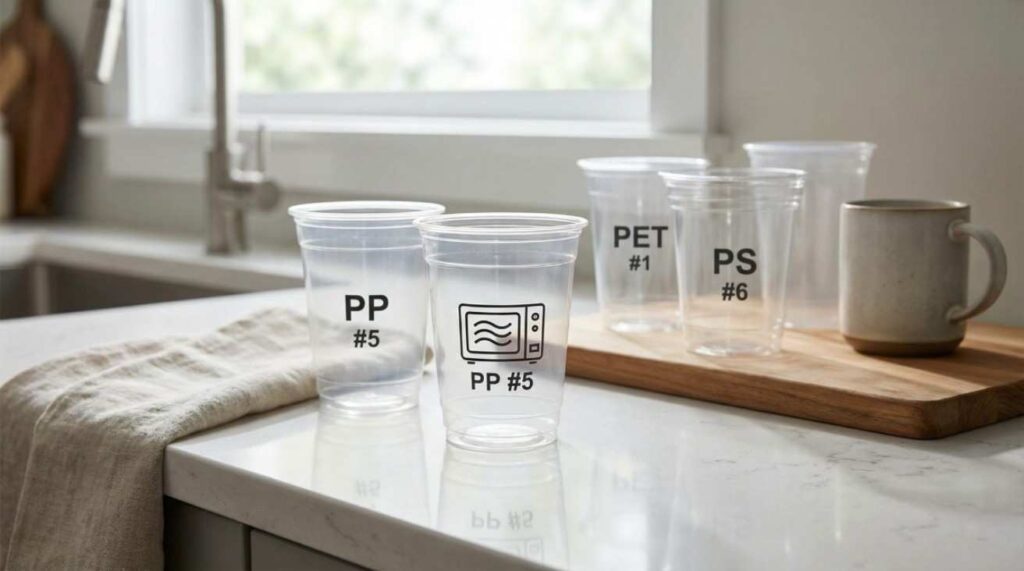
- Safe Plastics: Polypropylene (PP #5) cups are microwave-safe.
- Plastics like PET (#1), PVC (#3), and polystyrene (#6) are not heat-safe and may soften, deform, or melt.
- Chemical Risk: Heating plastic may release harmful chemicals, even if the cup looks intact.

What Happens When You Microwave a Plastic Cup
- Heat and Pressure: Heating liquids in a plastic cup can create uneven temperatures and pressure, causing the cup to warp, soften, or leak.
- Chemical Release: Unsafe plastics may release BPA, phthalates, or other additives, increasing microplastics in food.
- BPA-Free Isn’t Fully Safe: Even BPA-free labeled plastics can leach chemicals when microwaved.
- Long-Term Health Risks: Repeated use of non-microwave-safe cups can raise health risks over time.
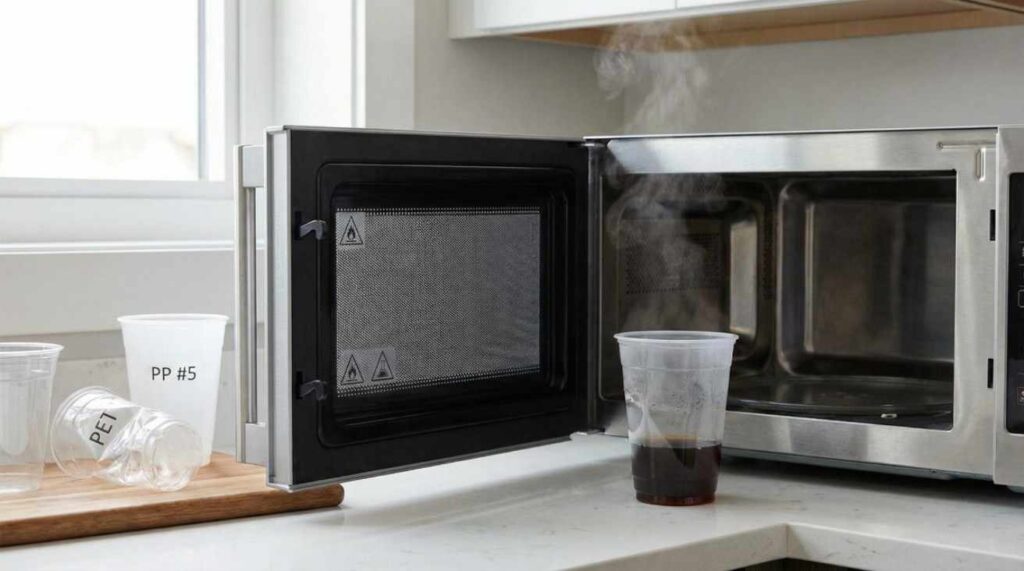
How to Tell If a Plastic Cup Is Microwave-Safe
- Check for Microwave-Safe Symbol: Wavy lines or a microwave icon indicate it is safe.
- Check the recycling symbol: plastics marked #5 (polypropylene or PP) are generally microwave-safe.
- Food-Grade Markings: Ensure the cup is made from food-grade plastic.
- Avoid Unsafe Plastics: PET, PVC, or polystyrene cups, especially disposable ones, are not safe.
- No Label? Use Glass or Ceramic: If unmarked, transfer your drink to glass or ceramic for complete safety.
FAQs — Can I Put a Plastic Cup in the Microwave?
- Q1: Can plastic cups melt in the microwave?
Yes, unsafe plastic cups can warp or melt. - Q2: What plastic is safest for microwaving cups?
Polypropylene (PP #5) labeled microwave-safe. - Q3: Is daily microwaving of plastic cups safe?
No. Repeated heating increases chemical and microplastic exposure. - Q4: Does BPA-free plastic guarantee microwave safety?
No. BPA-free cups can still leach other chemicals under heat.
Conclusion
Use a plastic cup in the microwave only if it is clearly labeled microwave-safe and made from polypropylene (PP #5). For maximum safety, prefer glass or ceramic cups, which prevent chemical leaching, protect health, and reduce microplastic exposure during reheating.


