

Can I cook the turkey with the plastic leg holder? Only if it’s oven-safe. Learn 5 safe, expert tips for a perfect, flavorful roast.
Can I cook the turkey with the plastic leg holder? You can only do so if it is labeled oven-safe. Standard plastic holders can melt, release harmful chemicals, or cause uneven cooking. Safe alternatives include kitchen twine, metal hock locks, or tucking the legs. Always monitor the internal turkey temperature and follow turkey cooking safety guidelines for a safe, flavorful roast.
Health Benefits of Turkey
| Advantage | Description |
|---|---|
| High in Protein | Turkey is rich in lean protein, which supports muscle growth, body repair, and overall strength. Eating properly cooked turkey preserves its nutritional value. |
| Low in Fat | Especially in white meat, turkey is low in saturated fat, making it heart-healthy, ideal for weight management, and a safer choice when considering oven-safe cooking methods. |
| Rich in Vitamins | Contains B vitamins like B6 and B12 that aid in energy metabolism, brain health, and overall wellness. Proper roasting ensures nutrient retention. |
| Mineral Content | Provides iron, zinc, and selenium, essential for immune function, thyroid health, and metabolism. Safe cooking preserves these minerals in the meat. |
| Supports Heart Health | Low-fat, high-protein turkey helps maintain healthy cholesterol levels and reduces cardiovascular risks. Choosing oven-safe alternatives during cooking ensures food safety. |
| Boosts Mood | Contains tryptophan, which helps produce serotonin, supporting better mood and quality sleep. Safe and even roasting maximizes these benefits. |
| Versatile & Delicious | Turkey can be roasted, grilled, or baked, making it tasty, adaptable, and perfect for holiday meals or family dinners. Using oven-safe leg holders keeps it safe and well-cooked. |
What is a Plastic Leg Holder / Hock Lock?
A plastic leg holder, also called a hock lock or poultry leg clip, is a small device used in turkeys to secure the legs during handling and roasting. Here’s what you need to know:
Purpose of a Plastic Leg Holder
- Keeps turkey legs together for even cooking.
- Helps maintain a neat presentation after roasting.
- Reduces movement during storage and transport.
Materials Used
- Standard plastic – convenient but not oven-safe.
- Heat-resistant nylon – can withstand moderate oven temperatures.
- Metal clips – fully oven-safe and reusable.
Risks with Non-Oven-Safe Plastic
- Can melt at roasting temperatures (325–375 °F).
- May release harmful chemicals like BPA or phthalates.
- Can cause uneven cooking, particularly in drumsticks and thighs.
Safe Practices
- Always check the material before roasting.
- Remove non-oven-safe plastic and replace with kitchen twine or metal hock locks.
- Ensures your turkey is safe, flavorful, and evenly cooked.
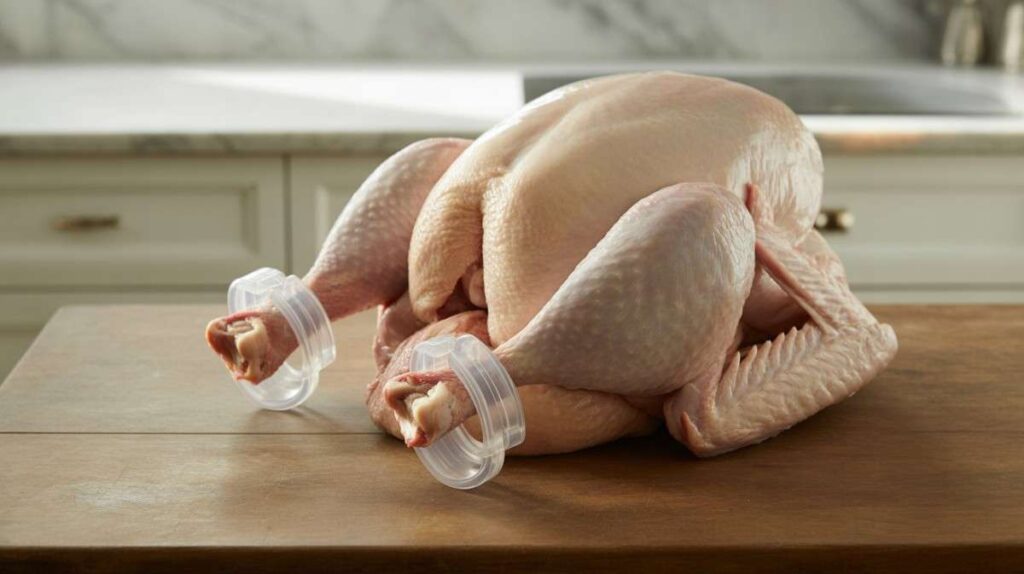
Why Cooking Turkey with Plastic Leg Holders is Risky
| Risk Category | Details | Impact on Turkey |
|---|---|---|
| Melting | Standard plastic holders are not oven-safe and can melt at 325–375 °F. | Damages turkey skin and juices; may ruin the roast. |
| Chemical Leaching | Heated plastic may release BPA or phthalates. | Contaminates meat; poses health risks. |
| Uneven Cooking | Tight plastic leg holders restrict heat circulation, especially in drumsticks and thighs. | Results in undercooked or overcooked meat. |
| Off-flavors/Odors | Melted plastic can mix with turkey juices. | Affects taste and smell, reducing overall quality. |
| Fire Hazard | In rare cases, melting plastic may burn or smoke in the oven. | Safety risk in the kitchen. |
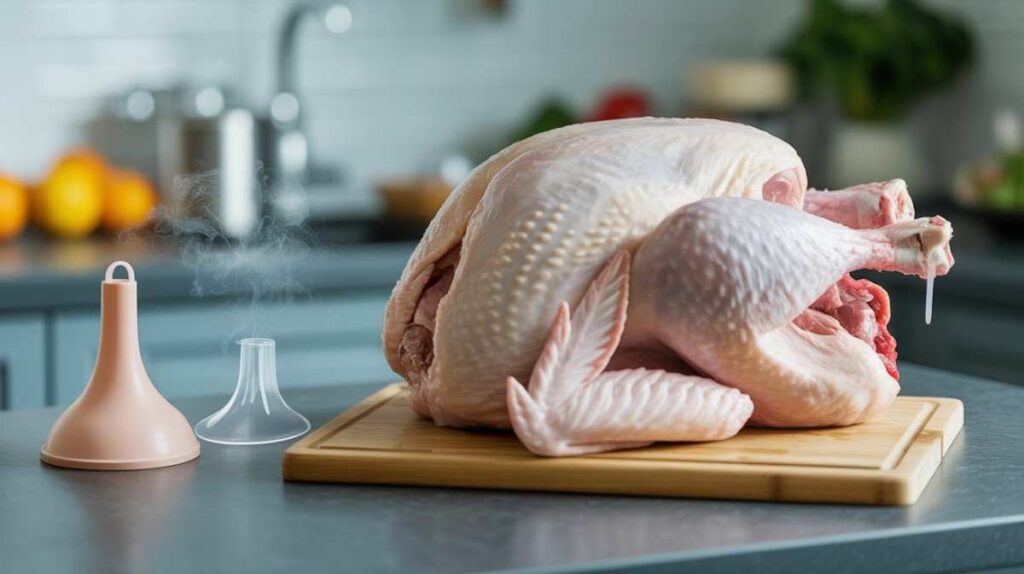
When It Might Be Safe to Leave Plastic On
1. Oven-Safe Plastic Holders
- Some plastic leg holders are made from heat-resistant nylon or metal.
- These are specifically designed for oven use and can withstand roasting temperatures without melting or releasing harmful chemicals.
- Check the packaging for oven-safe labels before cooking.
2. Benefits of Leaving Oven-Safe Holders
- Maintains leg position for even cooking.
- Improves presentation of the roasted turkey.
- Allows better airflow than tight standard plastic.
3. When to Remove Plastic
- If there is any doubt about oven safety, remove the plastic holder.
- Non-oven-safe plastic can melt, release toxic chemicals, and affect flavor.
- Safer alternatives include kitchen twine or metal hock locks.
4. Key Takeaway
- Using oven-safe holders correctly ensures a safe, flavorful, and evenly cooked turkey.
- Always verify material type and temperature rating before roasting.
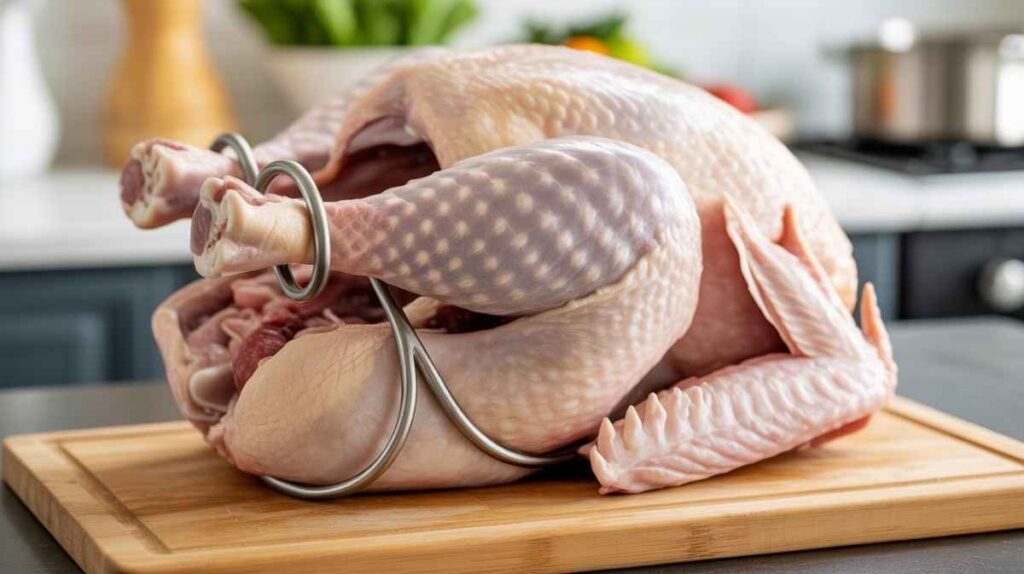
Tips for Safe and Perfectly Roasted Turkey
| Tip | Description | Benefit |
|---|---|---|
| Preheat the Oven Properly | Set the oven to 325–375 °F for optimal roasting. | Ensures even cooking throughout the turkey. |
| Remove Non-Oven-Safe Plastic | Check your plastic leg holder. Remove if not oven-safe. | Prevents melting and chemical leaching. |
| Use Safe Alternatives | Secure legs with kitchen twine or metal hock locks. | Maintains leg position and promotes even cooking. |
| Monitor Internal Temperature | Insert a food thermometer into the deepest part of the turkey thigh to ensure it has reached a safe temperature. | Ensures the turkey reaches 165 °F / 74 °C, safe to eat. |
| Arrange Legs for Even Heat | Space the legs properly for better air circulation. | Prevents undercooked meat. |
| Avoid Melted Plastic Residue | Inspect the turkey and oven for any plastic remnants. | Keeps the turkey safe and flavorful. |
Safer Alternatives to Plastic Leg Holders
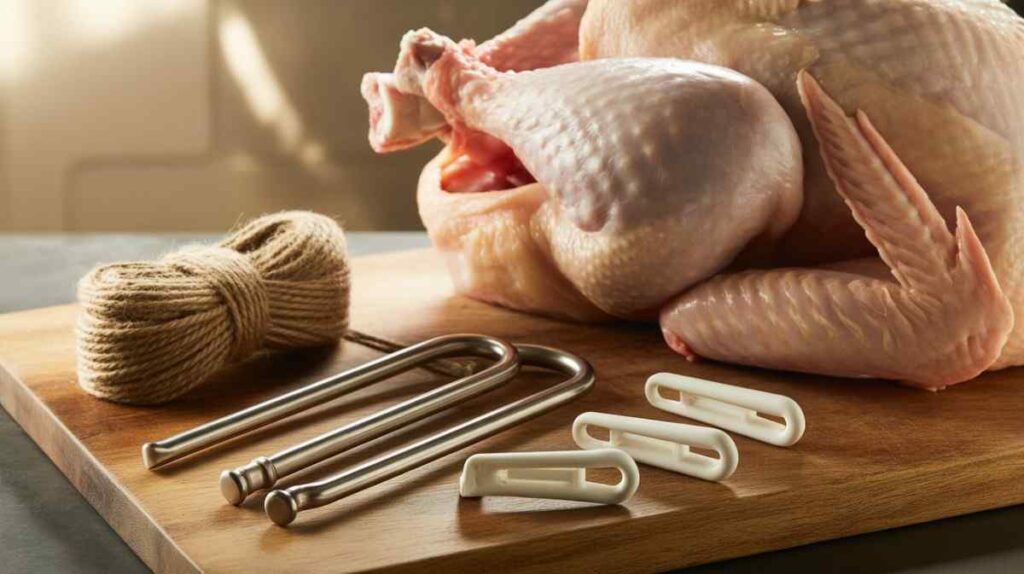
1. Kitchen Twine / Butcher’s String
- Use kitchen twine to truss turkey legs securely.
- Oven-safe and easy to use.
- Ensures even cooking and maintains the turkey’s shape.
2. Metal Hock Locks / Clips
- Durable and reusable, ideal for multiple roasts.
- Fully oven-safe, preventing melting or chemical leaching.
- Holds legs firmly while allowing proper airflow for even roasting.
3. Tucking Legs / Loose Arrangement
- Simply tuck the legs under the bird for natural positioning.
- Safe, no additional materials needed.
- May slightly affect presentation but still ensures even cooking.
4. Oven-Safe Nylon Holders
- Some manufacturers produce heat-resistant nylon hock locks.
- Rated for high oven temperatures; check the label before use.
- Safe alternative to standard plastic for maintaining leg placement.
Key Takeaways
- Avoid using non-oven-safe plastic holders to prevent melting, chemical leaching, and uneven cooking.
- Kitchen twine and metal hock locks are the most reliable alternatives.
- Using these methods ensures your turkey is safe, flavorful, and evenly roasted.
FAQs:
Q1: Can I leave the plastic leg holder on while roasting turkey?
A: Only if it is labeled oven-safe. Otherwise, remove it to prevent melting, chemical contamination, or uneven cooking.
Q2: Will a plastic leg holder melt in the oven?
A: Yes, standard plastic melts at typical roasting temperatures (325–375 °F). Use oven-safe nylon or metal holders instead.
Q3: What’s the best alternative to a plastic leg holder?
A: Use kitchen twine or metal clips. Both are oven-safe and keep legs securely in place for even cooking.
Q4: Does removing the plastic holder affect cooking time?
A: Slightly. Legs may cook more evenly without plastic. Always verify internal temperature for safety.
Q5: Can I deep-fry or grill turkey with a plastic leg holder?
A: No. Direct oil or flame can melt plastic and produce toxic fumes. Always remove non-oven-safe plastic before cooking.
Conclusion:
You can cook the turkey with the plastic leg holder only if it is clearly marked oven-safe. Standard plastic may melt or release harmful chemicals, affecting safety and flavor. Replace non-oven-safe plastic with kitchen twine or metal hock locks to ensure even cooking, proper leg positioning, and safe roasting. Monitor the internal temperature to ensure it reaches 165 °F / 74 °C. Following these best practices guarantees a safe, flavorful, and perfectly roasted turkey for holidays or family meals.


