
Yes, plastic cups can be recycled, but it depends on the type, local facilities, and proper cleaning. Are Plastic Cups Recyclable? 7 Important Facts explain safe and effective recycling.
Are Plastic Cups Recyclable?
Are plastic cups recyclable? The answer is yes and no. Some cups, such as PET (#1) and polypropylene (#5), can be recycled in many curbside programs. Others—like foam (#6) or compostable PLA (#7)—are not accepted. The confusion arises because cups look similar but are made from different resins. Understanding the resin code and your local recycling rules helps you recycle correctly, reduce contamination, and make sustainable choices.
Plastic Cup Recycling Guide
| Cup Type | Resin Code | Recyclable? | Notes |
|---|---|---|---|
| Clear PET Cups | #1 | Yes | Same plastic as water bottles; widely accepted in curbside bins. |
| Polypropylene Cups | #5 | Yes | Durable and reusable; recyclable in many communities. |
| Foam Cups (Polystyrene) | #6 | No | Difficult to recycle; rarely accepted curbside. |
| Compostable/PLA Cups | — | No | Needs industrial composting; not recyclable in regular programs. |
| Lids (small size) | Varies | Sometimes | Some too small for sorting machines; check local rules. |
| Straws | Varies | No | Almost never recyclable; should be discarded separately. |
Resin Identification Codes Explained
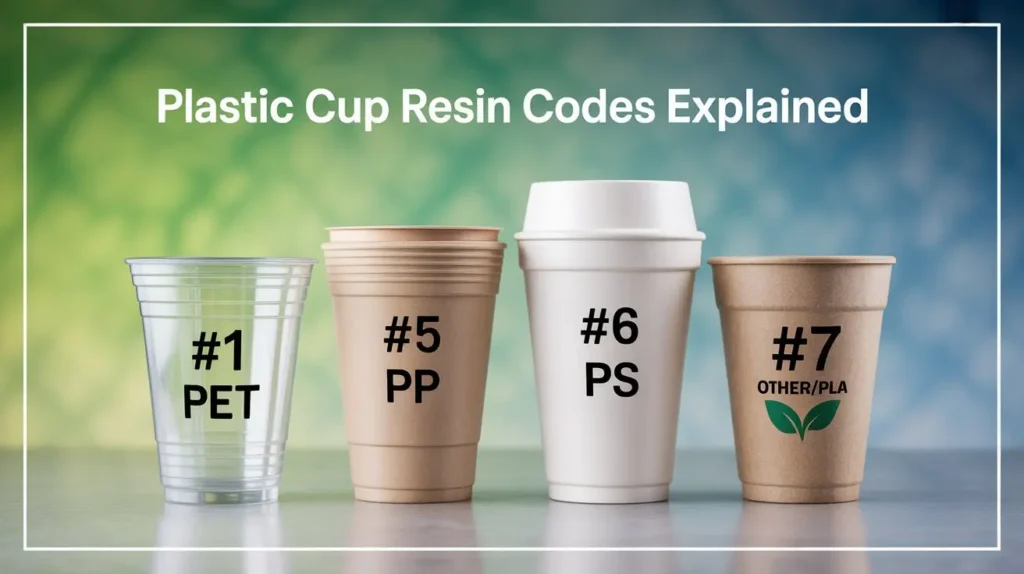
Plastic cups carry a Resin Identification Code (RIC) inside the recycling triangle. These numbers identify the material:
- #1 (PET): Clear, lightweight cups used for iced drinks; widely accepted.
- #5 (PP): Durable cups, like stadium versions; recyclable in some programs.
- #6 (PS): Foam or Styrofoam™ cups; almost never recyclable.
- #7 (Other/PLA): Mixed plastics or compostable cups; usually not recyclable.
These codes are not a guarantee that the material will be recycled—they simply identify the resin type. Always confirm with your local recycling guidelines before tossing plastic cups into the bin.
Plastic Cups That Are Not Recyclable
| Cup Type | Resin Code | Recyclable? | Reason / Notes |
|---|---|---|---|
| Polystyrene Foam Cups | #6 | No | Break easily into small pieces; too costly and difficult to recycle. |
| Compostable PLA Cups | — | No | Made for composting, not recycling; need industrial composting to avoid landfill. |
| Colored Party Cups | Varies | No | Thin or dyed plastics confuse sorting machines; often rejected by facilities. |
| Mixed Material Cups | — | No | Cups with plastic + wax or lining can’t be separated for recycling. |
Why Recycling Is Complicated
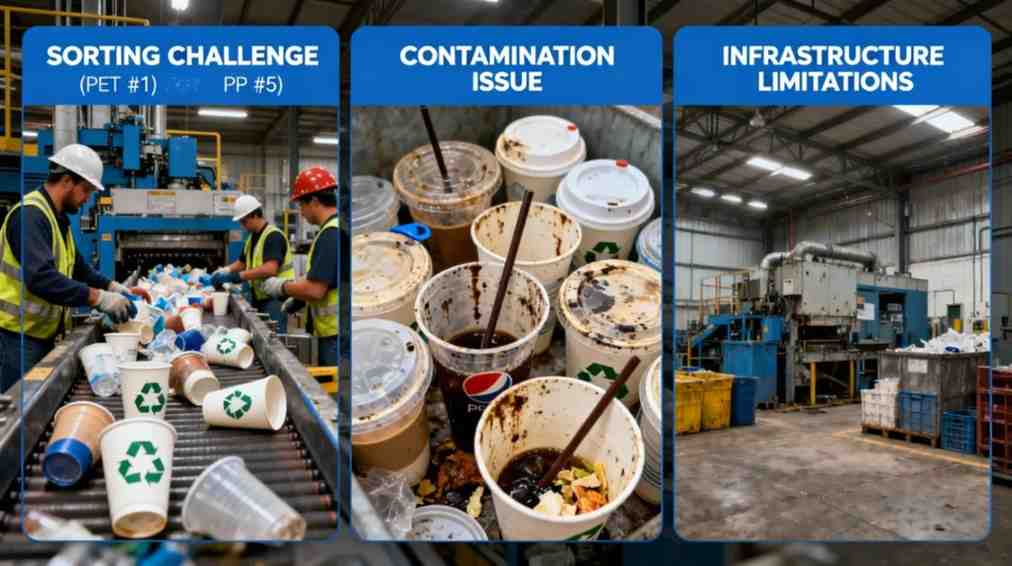
Sorting problems – PET (#1) and PP (#5) cups often look alike but cannot be processed together. Mixing them lowers quality and value.
Contamination issues – Leftover soda, milk, or coffee residue makes recycling harder. Dirty plastics are usually rejected.
Infrastructure & economics – Recycling depends on local facilities and costs. Some programs lack the resources to process certain plastics.
Tips and Eco-Friendly Alternatives
Prepare cups correctly – Rinse and dry cups before disposal. Remove straws and lids, and never toss foam or compostable cups into recycling bins.
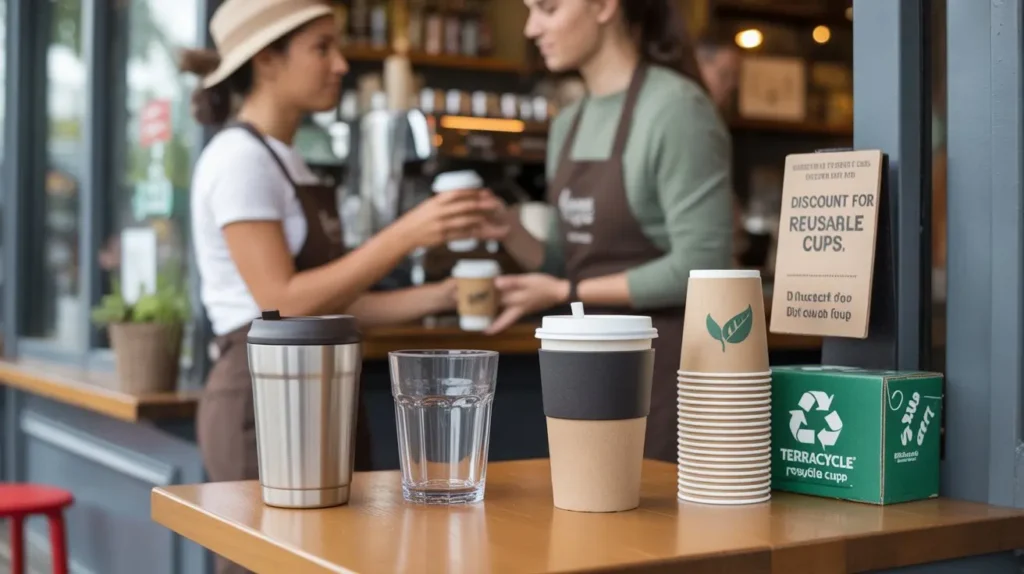
Switch to reusables – Stainless steel, glass, or sturdy polypropylene (PP) cups are the most sustainable choices. Many cafés even give discounts to customers who bring their own cups.
Try eco-friendly alternatives – If reusables aren’t possible, choose compostable paper cups or certified biodegradable versions. Some cities also offer cup-return programs where cups are collected, washed, and reused.
Use specialty recycling services – For hard-to-recycle plastics, programs like TerraCycle provide solutions that standard curbside bins cannot.
FAQs
Q1. Can I recycle cups with lids?
Sometimes. If both cup and lid are recyclable plastics, they may be accepted. Check size restrictions.
Q2. Are Styrofoam cups recyclable?
No. Foam is rarely accepted due to cost and contamination.
Q3. How do I know if a cup is recyclable?
Look for the recycling symbol and code. PET (#1) and PP (#5) are more likely accepted.
Q4. Are compostable cups recyclable?
No. They require composting, not recycling. Without facilities, they go to landfill.
Q5. What’s the best alternative?
Reusable cups are the most eco-friendly. If disposables are necessary, paper or compostable ones are better.
Conclusion
So, are plastic cups recyclable? The answer depends.Cups made from PET (#1) and PP (#5) are widely accepted for recycling, but foam (#6) and compostable versions usually are not. Recycling works only if rules are followed, so always check local guidelines. The most sustainable choice is to reduce disposables and switch to reusable options like stainless steel, glass, or durable PP cups.