

Storing warm food in plastic containers can release harmful chemicals. Use safe storage tips to protect your health and avoid hidden risks today.
Introduction
The use of warm food in plastic containers has become very common in homes and offices today. Storing leftovers, packing lunch, or keeping cooked food in the fridge—plastic containers are very convenient. However, along with convenience, an important question arises: is warm food in plastic containers safe for health?
By warm food, we mean food that is above room temperature but not boiling hot. At this temperature, heat can accelerate the process of chemicals from plastic leaching into the food, especially if the food is oily, acidic, or spicy. This is why understanding the safety of plastic containers is very important.
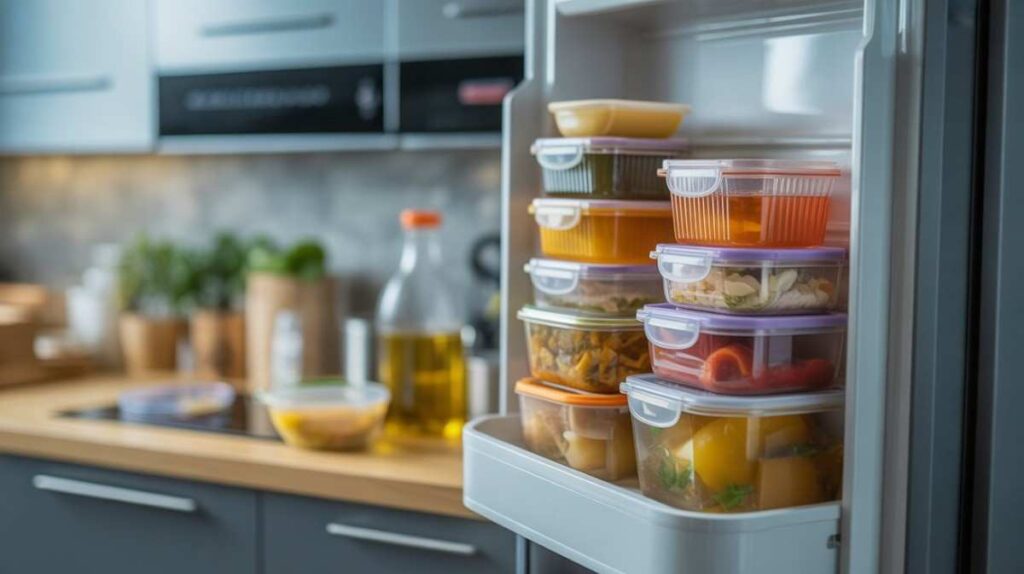
Health Risks of Warm Food in Plastic Containers
| Health Risk | Description |
|---|---|
| Hormonal Imbalance | Exposure to chemicals like BPA and phthalates can disrupt endocrine function. |
| Inflammation & Metabolic Problems | Chemical leaching may contribute to inflammation and metabolic issues over time. |
| Heart Health & Fertility Concerns | Long-term exposure to plastic chemicals may affect heart health and fertility. |
| Microplastics in Body | Microplastics can enter the body through food. |
Note: These health risks are associated with warm food in plastic containers and can gradually cause cumulative damage with daily use.
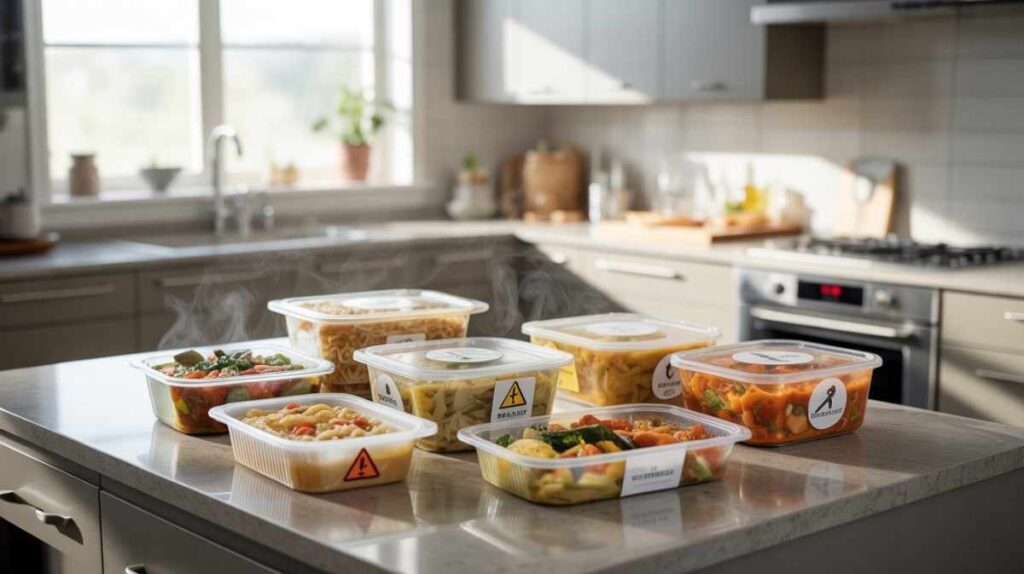
Is It Safe to Put Warm Food in Plastic Containers?
- Not Always Safe: Warm food in plastic containers is not safe in every situation.
- When It Becomes Risky:
- If the food is still hot.
- If the container is low-quality.
- If the food is tightly sealed.
- Chemical Leaching: Heat can soften the plastic, increasing the chances of chemicals leaching into the food.
- Misconceptions: Many people believe that microwave-safe or BPA-free plastic containers are completely safe. In reality, microwave-safe only means the container won’t melt.
- Health Risks: Reheating food in plastic or storing warm food daily can increase long-term health risks.

Which Plastics Are Safer for Warm Food Storage?
Not all plastics are safe for storing warm food. If you need to keep warm food in plastic containers, choosing the right type of plastic is very important.
- Safer Option:
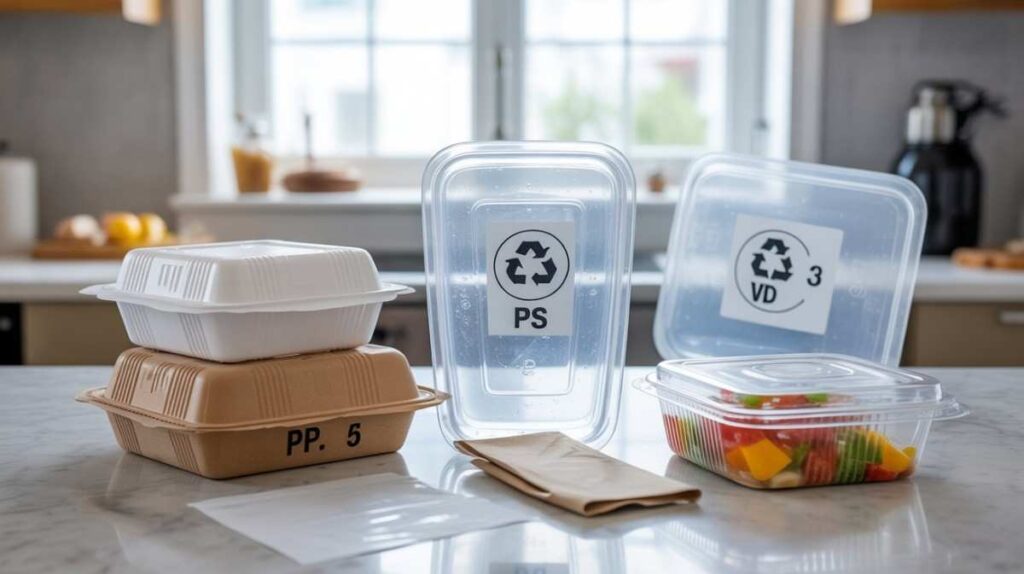
- Polypropylene (PP #5) is one of the safest plastics, able to withstand heat better than most other types.However, even PP is not ideal for very hot food.
- Plastics to Avoid:
- Polystyrene (PS #6)
- PVC (#3)
- Thin takeaway plastic containers
- Important Tip: Scratched, cloudy, or warped containers increase the risk of chemical leaching.
Best Practices for Storing Warm Food in Plastic Containers
| Best Practice | Description |
|---|---|
| Let Food Cool First | Allow hot food to cool slightly before placing it in plastic containers. |
| Avoid Airtight Sealing | Do not tightly seal very hot food to prevent chemical leaching. |
| Avoid Oily or Acidic Foods | Oily or acidic foods can increase chemical migration from plastic. |
| Limit Daily Reheating | Avoid reheating food in plastic containers every day. |
| Prefer Safer Alternatives | Use glass or stainless steel containers whenever possible. |
Note: Following these practices can significantly reduce chemical exposure and microplastic risks when using warm food in plastic containers.

Chemical Complexity and Unknown Exposures
Warm food in plastic containers exposes consumers to more than BPA and phthalates. Studies show that hundreds of undisclosed chemicals can migrate into warm or reheated food.
Key points:
- Complex mixtures may interact and amplify biological effects
- Endocrine and metabolic disruption possible
- Limited safety testing on cumulative chemical exposure
- Safer alternatives: glass or stainless steel containers
Takeaway: Awareness helps make safer storage choices beyond common chemical warnings.

FAQs — Warm Food in Plastic Containers
Q1: Is it safe to store warm food in plastic containers daily?
No. Daily use can increase chemical leaching and long-term health risks.
Q2: Does letting food cool make plastic safe?
Yes, it reduces the risk, but plastic still isn’t the best option.
Q3: Is BPA-free plastic completely safe?
No. BPA-free does not mean the container is free from all chemicals.
Q4: What is the safest container for warm food?
Glass and stainless steel containers remain the safest choices.
Conclusion
Warm food in plastic containers is convenient, but not ideal for health. Heat combined with plastic can cause chemical leaching, microplastics, and long-term health risks.
If using plastic is necessary, keep it limited to short-term use. Wherever possible, prefer glass or stainless steel containers in your daily routine. A little awareness and the right choices can help protect you and your family from unnecessary health risks.


