
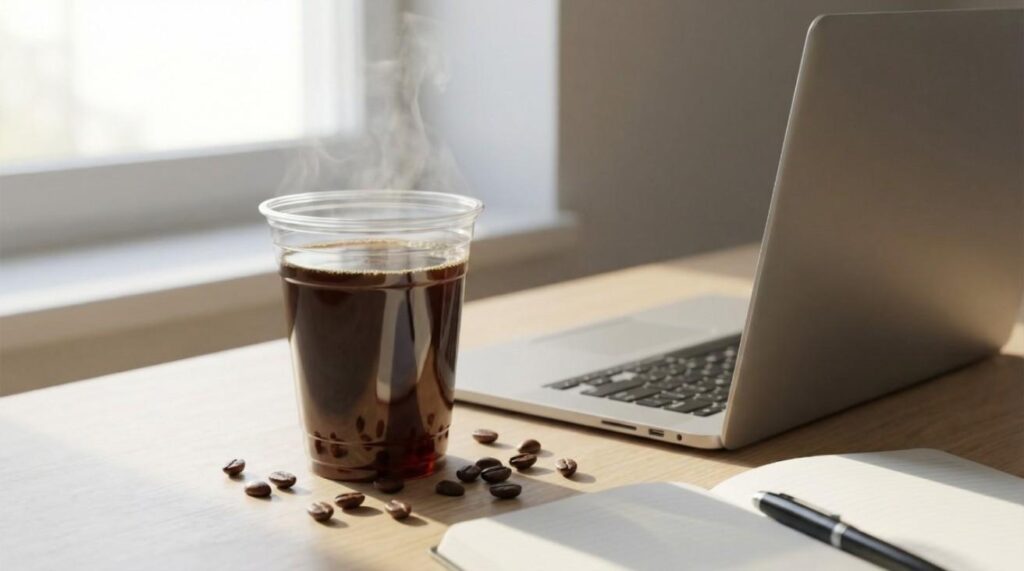
Can you put hot coffee in a plastic cup? Only if it’s heat-safe like polypropylene (#5). Avoid thin disposable cups to prevent chemicals and warping.
Introduction
Can you put hot coffee in a plastic cup is a common question because plastic cups are widely used in offices, homes, and takeaway coffee shops. Hot coffee is typically served between 160°F and 185°F, a temperature high enough to affect many types of plastic. Not all plastic cups are made to withstand heat, and using the wrong one may cause health or safety concerns. Knowing plastic cup heat resistance helps minimize chemical exposure and prevents damage to your drinkware.
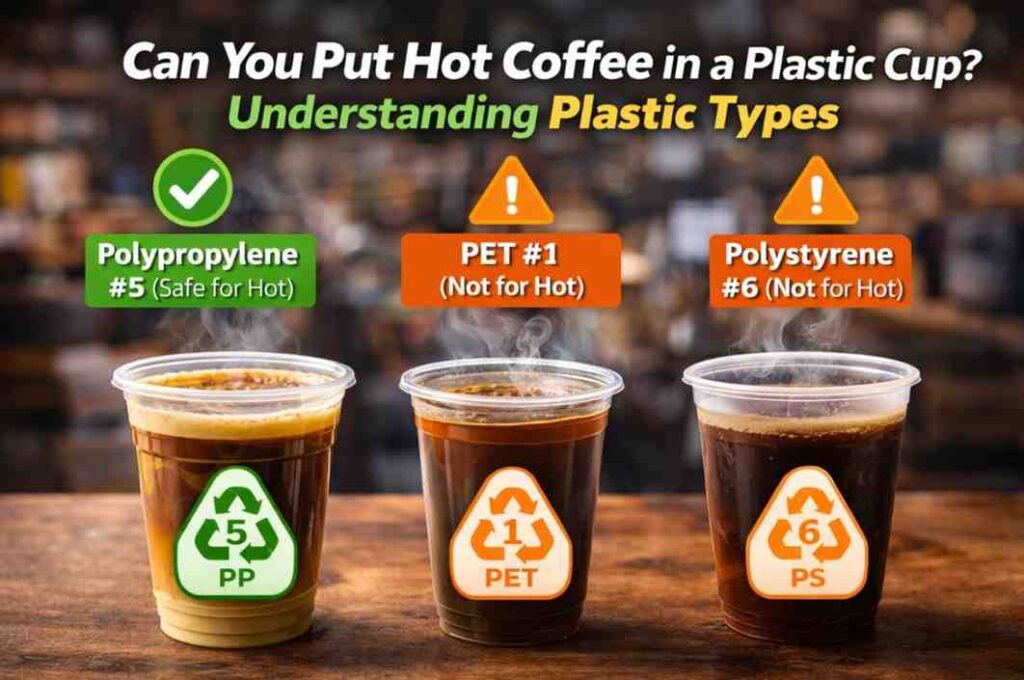
Can You Put Hot Coffee in a Plastic Cup? Understanding Plastic Types
- Plastic type matters: Whether can you put hot coffee in a plastic cup depends entirely on the type of plastic used.
- Polypropylene (PP #5): This plastic is heat-resistant and commonly used for hot beverage lids and reusable cups because it can handle higher temperatures without breaking down quickly.
- PET (#1) and Polystyrene (#6): These plastics are mainly designed for cold drinks and are not suitable for hot coffee.
- Heat-related risks: Pouring hot coffee into unsuitable plastics may cause warping, weakening, or chemical leaching.
- Safety check: Always check the resin identification code on the bottom of the plastic cup to ensure it is safe for hot beverages.
What Happens When Hot Coffee Touches Plastic?
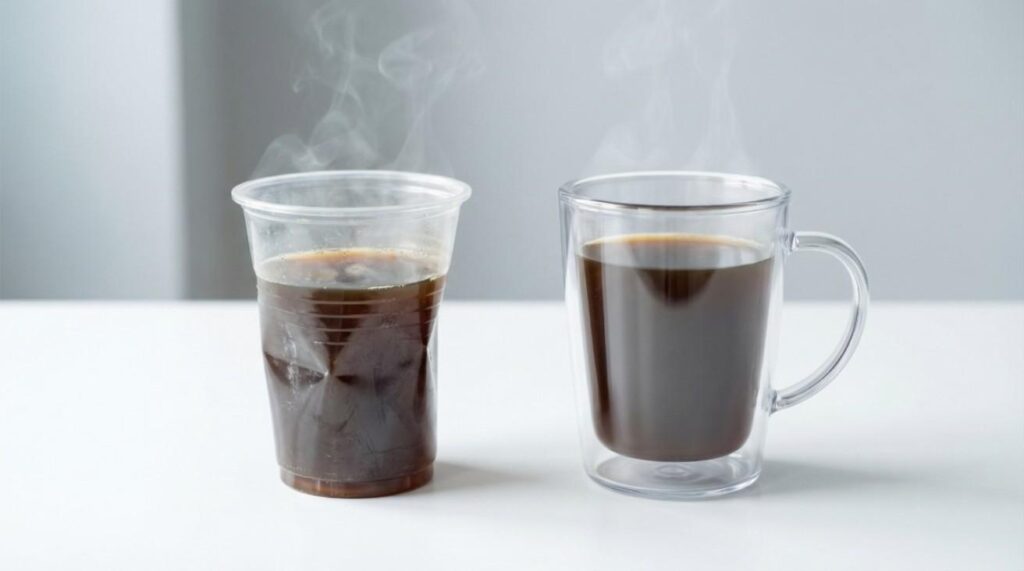
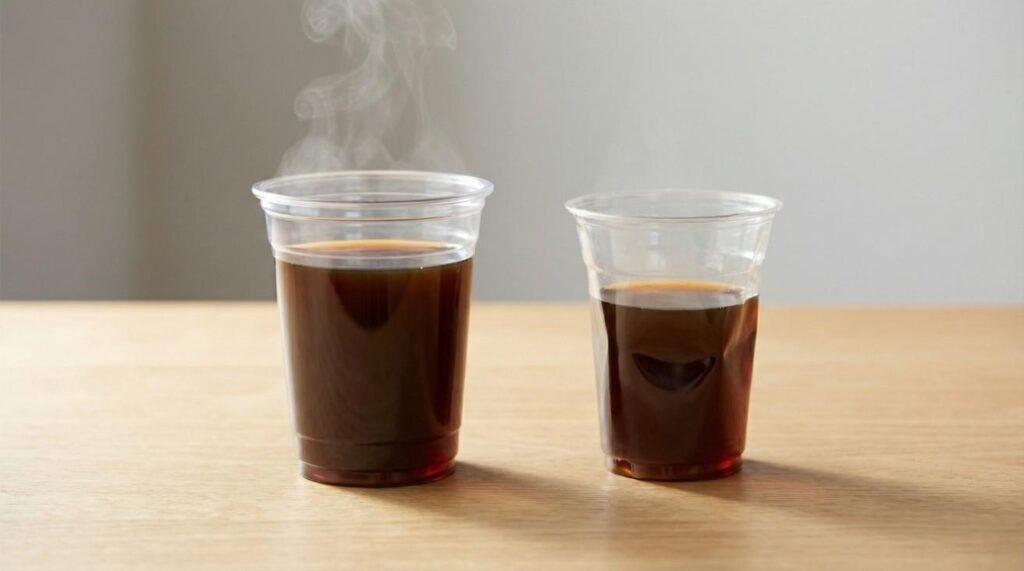
- Plastic softening: Hot coffee can soften plastic, particularly thin disposable cups.
- Chemical migration: Heat increases the transfer of chemicals from plastic into your drink.
- Microplastic release: Low-quality plastics may release microplastics faster when exposed to hot liquids.
- Long-term health risks: A single cup may not be harmful, but daily consumption can raise potential health concerns over time.

Health Risks of Drinking Hot Coffee from Plastic Cups
| Topic | Details / Key Points |
|---|---|
| Can You Put Hot Coffee in a Plastic Cup? | Can you put hot coffee in a plastic cup? It depends on the type of plastic. Polypropylene (PP #5) is heat-resistant, while PET (#1) and polystyrene (#6) are meant for cold drinks. Using the wrong cup may cause warping or chemical leaching. |
| What Happens When Hot Coffee Touches Plastic? | Hot coffee can soften plastic, increase chemical migration, and release microplastics, especially in thin or low-quality cups. Repeated use increases potential health risks. |
| Health Risks | Drinking hot coffee from plastic cups can expose you to chemicals like BPA or BPS. Even BPA-free plastics may leach harmful substances when heated. Frequent use, especially with reused or scratched cups, can raise long-term health concerns. |
When Is It Safe to Put Hot Coffee in a Plastic Cup?
- Check for hot beverage labeling: Only use cups clearly marked as safe for hot drinks.
- Use heat-resistant plastics: Thick and durable polypropylene (PP) cups are designed to handle high temperatures.
- Avoid thin disposable cups: Cups meant for cold drinks can warp, melt, or release harmful chemicals.
- Microwave safety: Only use plastic labeled microwave-safe, and avoid frequent reheating of coffee in plastic.
- Inspect cup condition: Cracks, scratches, or wear can compromise heat resistance, so replace damaged cups.
- Limit exposure time: Don’t leave hot coffee in plastic cups for long periods to reduce chemical leaching.
Safer Alternatives to Plastic Cups for Hot Coffee
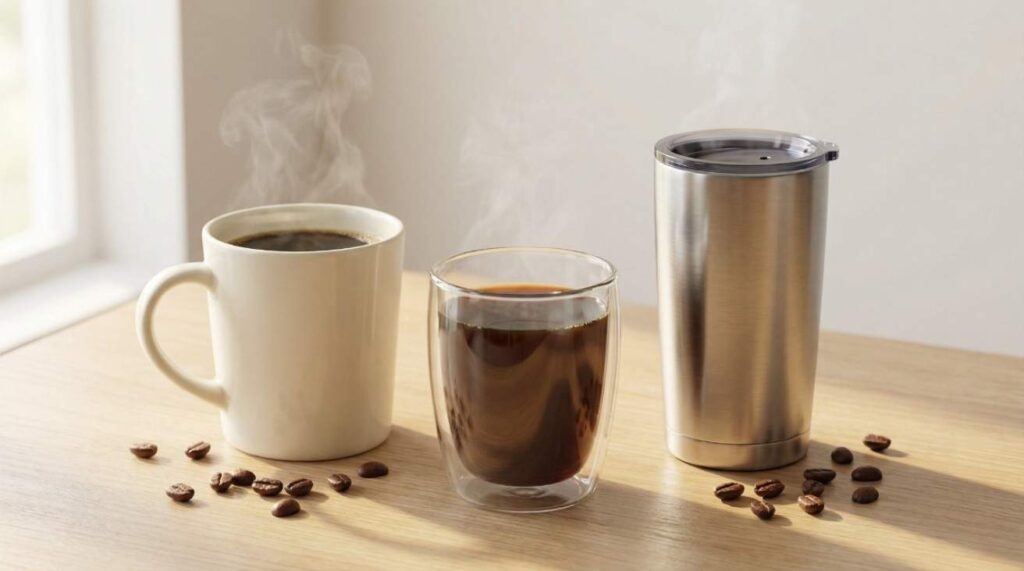
- Ceramic mugs: A very safe option, ceramic does not react to heat and preserves coffee’s natural flavor.
- Glass cups: Chemically inert and heat-stable, glass is another reliable choice for hot beverages.
- Stainless steel tumblers: Perfect for travel, stainless steel provides durability, insulation, and zero chemical leaching.
- Health and taste benefits: Using these materials protects your health and keeps the coffee tasting fresh.
- Environmental advantage: Choosing non-plastic cups helps reduce plastic waste and environmental impact.
FAQs — Can You Put Hot Coffee in a Plastic Cup?
- Can you put hot coffee in a plastic cup every day?
No. Daily use can increase exposure to chemicals and microplastics. - Can hot coffee melt a plastic cup?
It usually won’t melt completely, but it can soften, warp, or leak. - What plastic is safest for hot coffee?
Polypropylene (#5) is the safest choice for hot beverages. - Does hot coffee release microplastics?
Yes. Heat can accelerate the release of microplastics from plastic cups.
Conclusion — Can You Put Hot Coffee in a Plastic Cup or Not?
Can you put hot coffee in a plastic cup? Yes, but only if the cup is heat-safe and designed for hot beverages. Most disposable plastic cups are unsuitable and may pose health risks over time. For regular use, ceramic, glass, or stainless steel cups are safer, healthier, and more practical choices.