
Can you put acetone in a plastic bowl? Yes, but only PE or PP plastics. Learn which plastics melt, which are safe, and how to avoid damage.
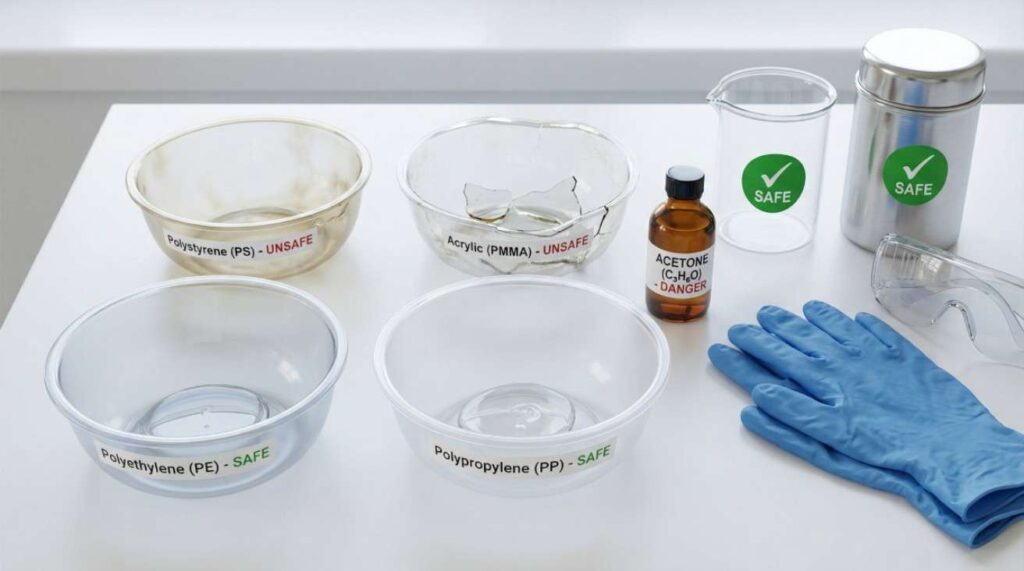
If you are wondering “can you put acetone in a plastic bowl,” the answer is yes, but only with acetone-resistant plastics like polyethylene (PE) or polypropylene (PP). Avoid plastics such as polystyrene (PS), acrylic, ABS, or PVC, as acetone can dissolve, warp, or crack them. Always test a small area first, or for maximum safety, use glass or metal containers instead. Knowing acetone and plastic compatibility helps ensure safe handling and prevents damage or chemical hazards.
Safety Tips and Alternative Containers
| Aspect | Recommendation | Notes / Safety Tips |
|---|---|---|
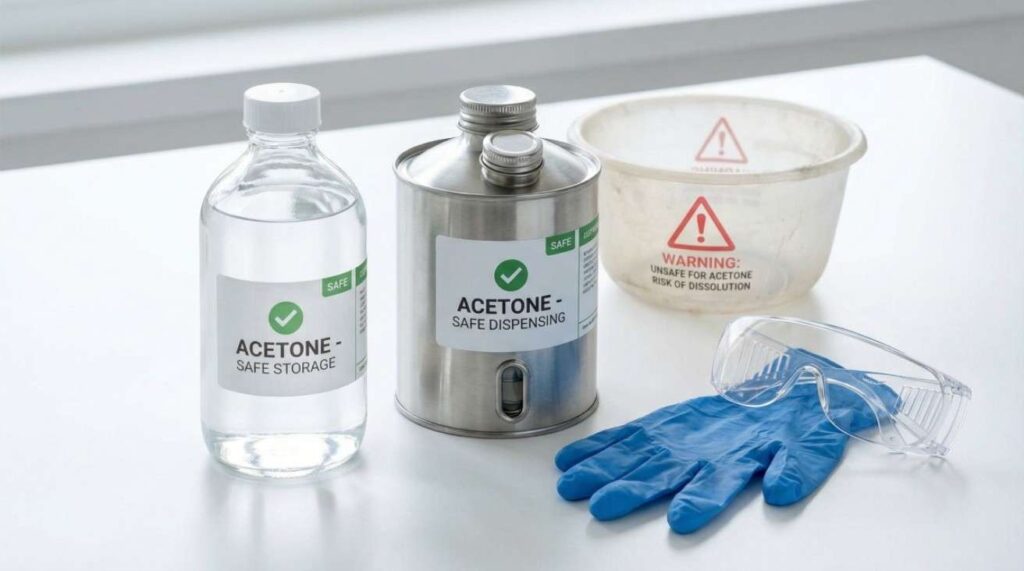
| Ventilation & Protection | Ensure proper airflow and use protective gloves and safety glasses. | Reduces inhalation risks and protects skin and eyes from acetone |
| Safe Containers | Glass or metal containers | If you are wondering “can you put acetone in a plastic bowl,” these are the safest alternatives |
| Alternative Cleaning Options | Non-acetone nail polish removers, isopropyl alcohol | Safer for cleaning surfaces without damaging plastics |
| Prolonged Exposure | Avoid long-term contact even with acetone-resistant plastics | Prevents weakening, warping, or clouding of the plastic |
| General Safety | Use safe solvents for plastic surfaces | Maintains durability and reduces chemical hazards |
Plastics That Are Safe With Acetone
If you are wondering “can you put acetone in a plastic bowl,” it’s important to know which plastics can safely handle this solvent.
1. Acetone-Resistant Plastics
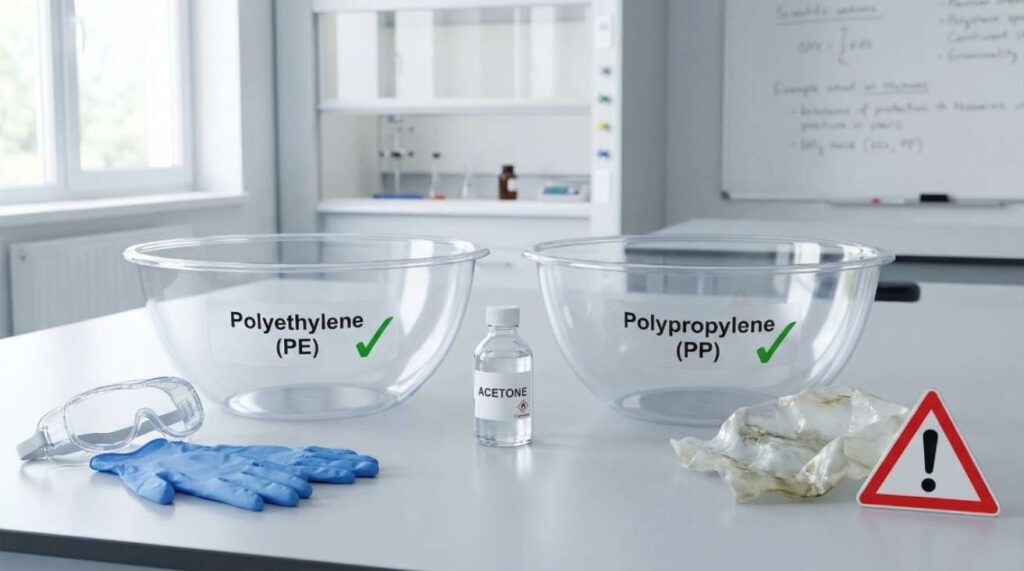
- Polyethylene (PE) and Polypropylene (PP) are safe for short-term contact with acetone.
- These plastics are commonly found in food containers, laboratory bowls, and household items.
- Their strong chemical resistance makes them ideal for handling acetone safely.
2. Precautions With Plastics
- Even acetone-resistant plastics may weaken or deform if exposed for too long.
- Always test a small area first to ensure the plastic can handle the solvent.
- Following this helps prevent cracks, warping, or clouding of the bowl.
3. Safety Tips
- Using acetone-resistant plastics reduces risks of spills, leaks, and fire hazards.
- Proper acetone and plastic compatibility is essential for safe handling and storage.
- Remember, acetone safety is not just about the container—ensure good ventilation and protective gear when working with the solvent.
Plastics That Will Be Damaged by Acetone
If you are wondering “can you put acetone in a plastic bowl,” it’s important to identify plastics that cannot handle acetone:
1. Plastics Vulnerable to Acetone
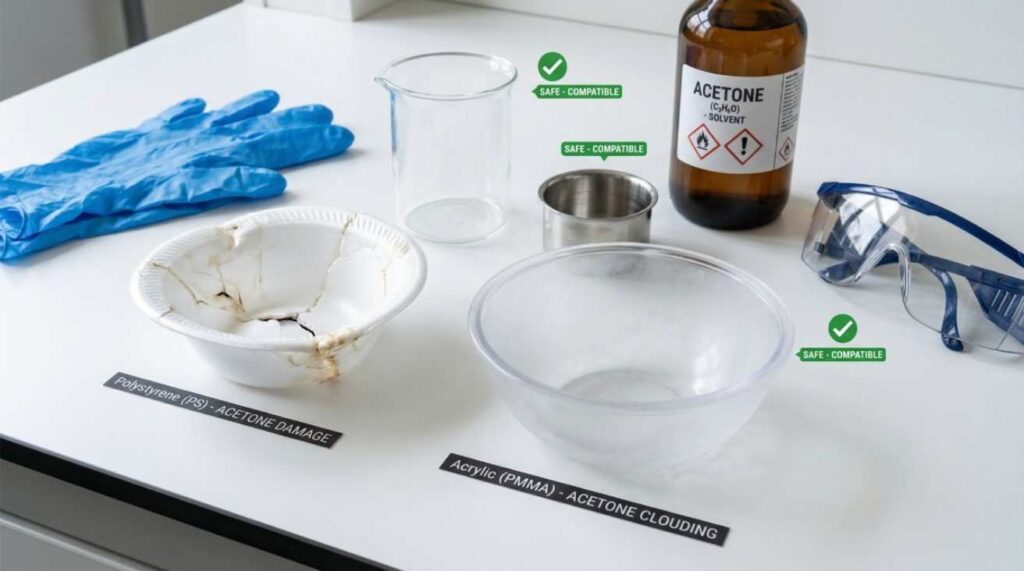
- Polystyrene (PS), acrylic (PMMA), ABS, and PVC are highly susceptible to acetone.
- Contact with acetone can cause warping, clouding, cracks, or complete dissolution.
2. Risks of Using Unsafe Plastics
- Acetone exposure makes these plastics brittle and unreliable for chemical use.
- Always check chemical resistance before pouring acetone to prevent damage.
- Using unsafe plastics can increase flammability risks, as acetone is highly volatile.
3. Safer Alternatives
- Use glass or metal containers instead of vulnerable plastics.
- For cleaning plastic surfaces, choose acetone-safe solvents.
- Understanding which plastics are damaged by acetone ensures safety and efficiency.
Advantages of Using Plastic Bowls for Oils
| Plastic Type | Safe With Acetone? | Advantages | Notes / Tips |
|---|---|---|---|
| Polyethylene (PE) | Yes, short-term use | Resistant to acetone and oils, lightweight, durable, easy to handle | Test small area before prolonged exposure |
| Polypropylene (PP) | Yes, short-term use | Chemical-resistant, shatter-proof, suitable for mixing/storing oils | Limit contact time with acetone |
| Polystyrene (PS) | No | – | Can dissolve, warp, or crack with acetone |
| Acrylic (PMMA) | No | – | Avoid acetone; may cloud or crack |
| ABS / PVC | No | – | Not suitable for acetone; brittle when exposed |
| Glass / Metal | Yes | Best alternative: highly durable, fully acetone and oil resistant | Ideal for long-term storage or mixing of chemicals and oils |
FAQs — Can You Put Acetone in a Plastic Bowl?
Q1: Can you pour acetone in any plastic bowl?
A: No. Only acetone-resistant plastics like PE or PP are safe. Avoid PS, acrylic, ABS, and PVC.
Q2: What happens if acetone touches unsafe plastic?
A: The plastic may warp, crack, cloud, or dissolve, potentially causing leaks or spills.
Q3: What are safer alternatives to plastic for acetone?
A: Use glass or metal containers, or safer solvents like non-acetone removers or isopropyl alcohol.
Conclusion
Pouring acetone in a plastic bowl is only safe with resistant plastics like PE and PP. Always identify the plastic type, limit exposure, and prioritize safety with gloves, ventilation, and proper containers. When in doubt, glass or metal containers are the safest choice. Understanding acetone’s reaction with plastic and plastic bowl chemical resistance ensures effective use without damage or hazards.