

Plastic fuel containers: 5 safe and reliable options to store gasoline and diesel. Explore top types, features, and expert fuel storage tips.
Introduction:
Plastic fuel containers are essential for safely storing and transporting gasoline, diesel, and other flammable liquids. Designed for generators, lawn equipment, vehicles, boats, and industrial machinery, these containers handle fuel pressure effectively while minimizing spills and vapor leaks. With modern designs and enhanced safety standards, plastic fuel containers provide a durable, reliable, and practical solution for everyday fuel storage and handling.
What Are Plastic Fuel Containers?
- Plastic fuel containers are purpose-built storage solutions made from high-density polyethylene (HDPE), which resists chemical corrosion, fuel vapors, and physical impact.
- Designed specifically for gasoline and diesel, not general liquids.
- These approved fuel containers feature sealed caps, controlled pour spouts, and pressure-resistant walls for safe fuel transport.
- Lightweight, corrosion-resistant, and easy to handle, plastic fuel containers offer reliable portability and durability.
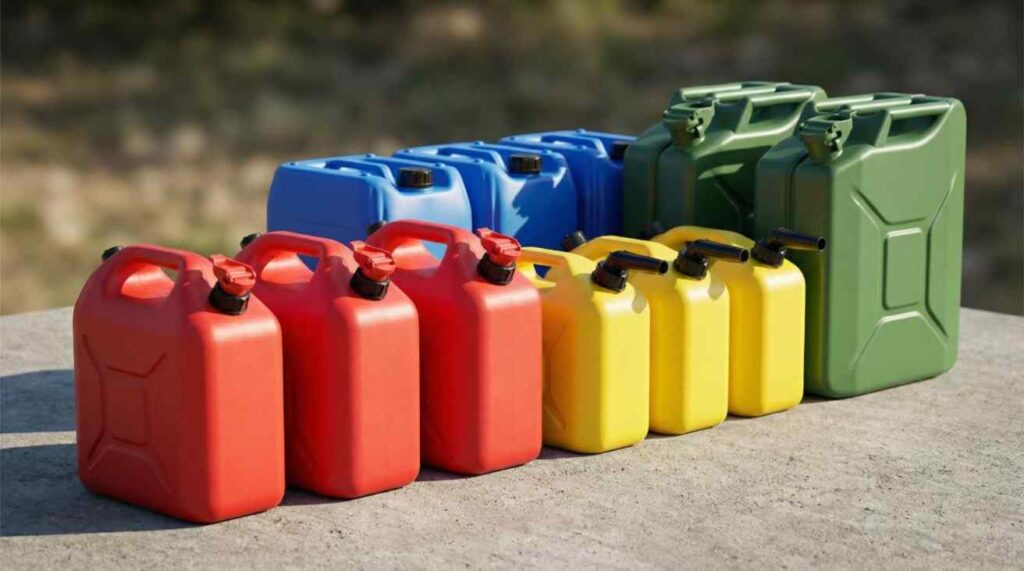
Key Features and Benefits of Plastic Fuel Containers
| Feature / Benefit | Description |
|---|---|
| Advantages over metal cans | Plastic fuel containers provide clear benefits compared to metal fuel cans. |
| Lightweight & corrosion-resistant | Easy to transport and resistant to rust or corrosion. |
| HDPE durability | Withstands temperature changes and fuel expansion effectively. |
| Safety features | Includes flame mitigation devices, spill-resistant spouts, and child-resistant caps. |
| Improved fuel handling | Enhances safety and reduces fire risks. |
Types of Plastic Fuel Containers
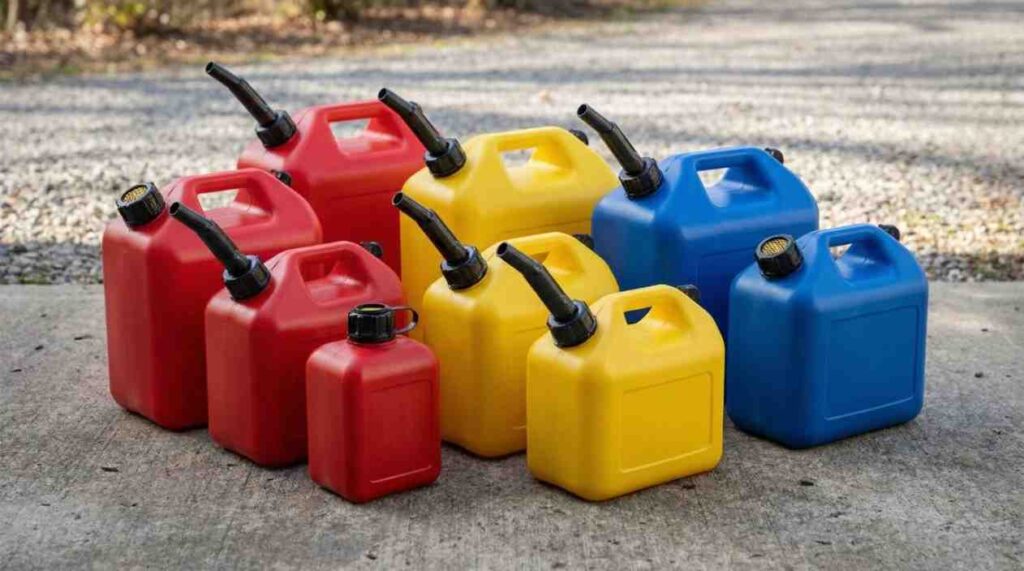
- Plastic fuel containers come in different types to suit various fuel storage needs.
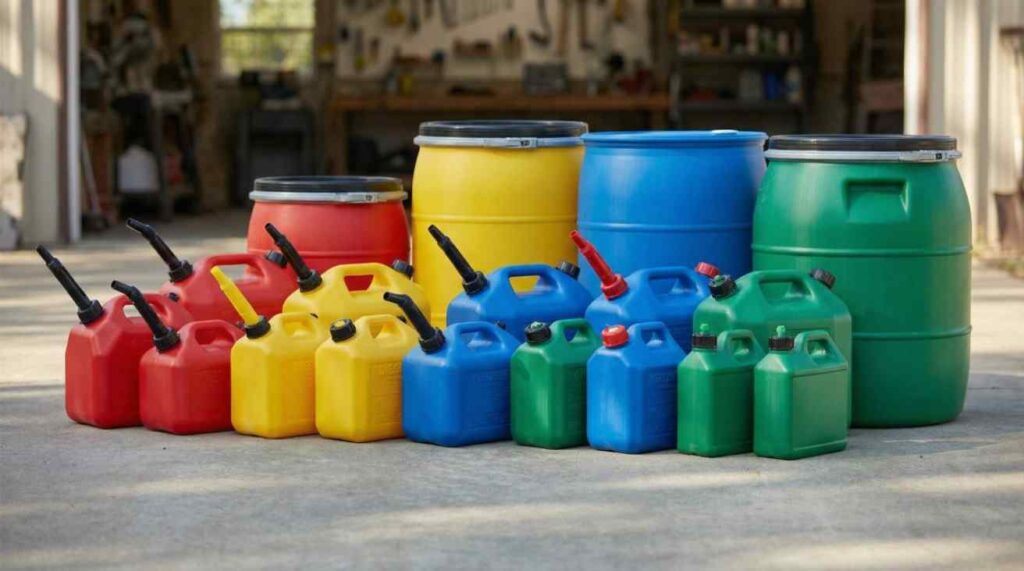
- Portable plastic fuel containers, also called plastic gas cans or jerry cans, are available in 1- to 5-gallon sizes, ideal for generators, lawn mowers, motorcycles, and small engines.
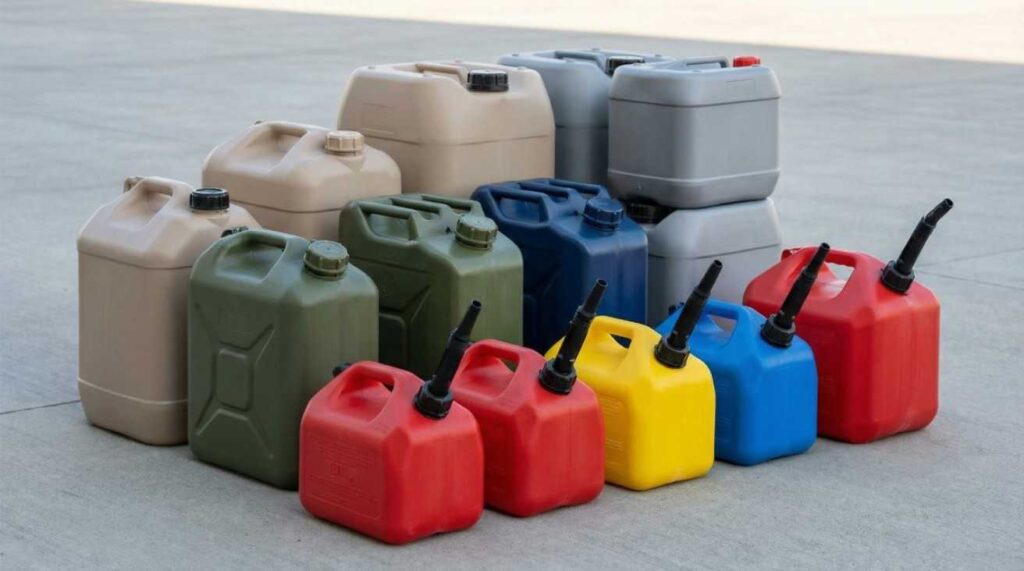
- Large plastic fuel containers are designed for bulk fuel storage in agricultural, commercial, and industrial settings, featuring thicker HDPE walls for extra durability.
- Specialized plastic fuel containers include spill-proof spouts, vented caps, ergonomic handles, and stackable designs.
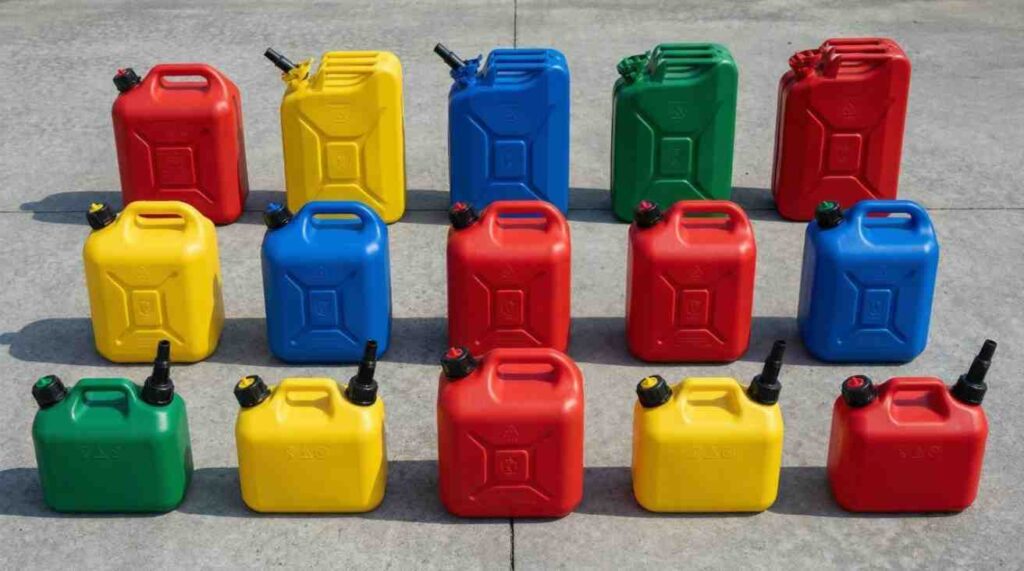
- Many containers are color-coded to distinguish gasoline from diesel, reducing misfueling risks.
Safety Standards and Regulations for Plastic Fuel Containers
- Plastic fuel containers must meet established safety regulations.
- In the U.S., many portable fuel containers comply with ASTM F2517 standards.
- EPA-compliant gas cans help limit fuel vapor emissions and accidental spills.
- Certified plastic fuel containers with flame mitigation devices reduce ignition and leakage risks.
How to Choose the Right Plastic Fuel Container
- Choose a plastic fuel container based on fuel type, capacity, and intended use.
- Gasoline and diesel containers are usually color-coded for safety.
- Small portable containers suit home use, while larger ones fit commercial needs.
- Select HDPE containers with spill-proof spouts, vented caps, and proper certifications.
Proper Use and Storage of Plastic Fuel Containers
| Guideline | Description |
|---|---|
| Storage location | Store plastic fuel containers in cool, ventilated areas away from heat sources. |
| Filling limits | Do not overfill containers, as fuel expands with temperature changes. |
| Caps and inspection | Keep caps tightly sealed and inspect containers regularly for cracks or leaks. |
| Safety benefit | Proper storage minimizes vapor buildup and reduces fire risks. |
FAQs:
- Q: Are plastic fuel containers safe for gasoline storage?
Yes, certified HDPE plastic fuel containers are safe for gasoline when used properly. - Q: How long can fuel be stored in plastic fuel containers?
Gasoline typically lasts 3–6 months, while diesel can last longer with proper storage. - Q: Are plastic fuel containers better than metal gas cans?
Plastic fuel containers are lighter, corrosion-resistant, and easier to handle than metal cans. - Q: Can plastic fuel containers be used for diesel fuel?
Yes, many containers are labeled and designed for diesel fuel.
Conclusion:
Plastic fuel containers provide a safe, durable, and efficient solution for fuel storage and transport. By choosing certified containers and following proper handling, users reduce safety risks and improve reliability. For both home and professional use, plastic fuel containers remain a practical fuel storage option.


