
7 powerful reasons to choose glass or plastic baby bottles for safety, durability, convenience, and the ideal feeding option for your baby.
Glass vs. Plastic Baby Bottles:
Glass or plastic baby bottles each offer unique advantages. Glass baby bottles provide maximum purity, long-lasting durability, and zero chemical concerns, making them perfect for parents prioritizing safe feeding. Plastic baby bottles deliver lightweight comfort, shatter-resistant practicality, and budget-friendly convenience, ideal for everyday use. Choosing glass or plastic baby bottles ultimately depends on your safety priorities, ease of handling, and overall cost.

Glass vs. Plastic Baby Bottles: Safety Comparison Table
| Feature | Glass Baby Bottles | Plastic Baby Bottles (BPA-Free) |
|---|---|---|
| Chemical Safety | 100% chemical-free and toxin-free | Safe when used correctly; BPA-free models recommended |
| Durability | Very durable but can break if dropped | Shatter-resistant and long-lasting |
| Hygiene Level | Resistant to stains and odors; simple to sanitize | Can develop scratches over time, potentially holding residue |
| Weight | Heavier; provides stability during feeding | Light and easy for babies to hold on their own |
| Best For | Newborns & parents prioritizing cleanliness | Older infants & suitable for everyday use |
Durability, Convenience & Everyday Use
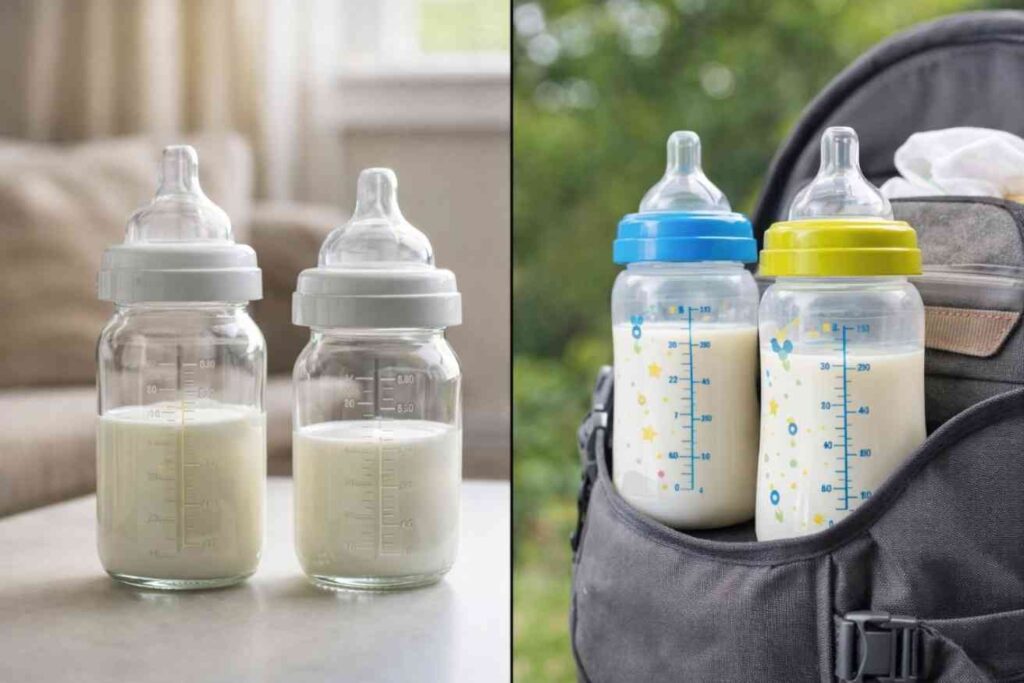
When choosing between glass or plastic baby bottles, daily lifestyle and convenience play a key role:
Glass Baby Bottles:
- Highly durable and long-lasting
- Resist stains, odors, and scratches
- Maintain consistent quality over time
- Heavier weight provides stability during feeding
- Ideal for home use and newborns
Plastic Baby Bottles:
- Lightweight and easy to handle
- Shatter-proof, reducing risk of accidents
- Travel-friendly and convenient for daycare
- Perfect for on-the-go feeding and older babies
Cleaning, Sterilizing & Maintenance
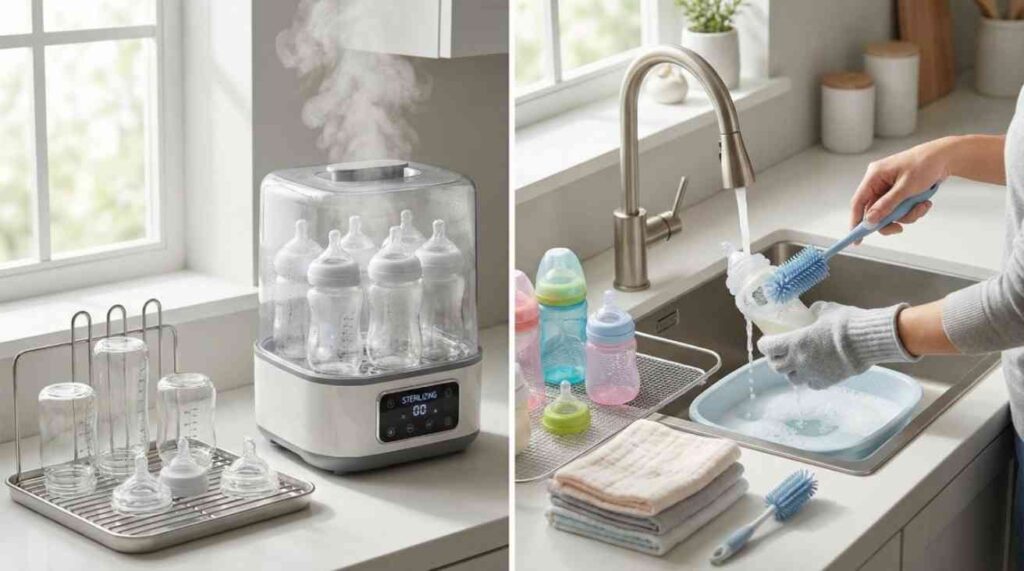
Both glass and plastic baby bottles are safe for feeding, but they differ in cleaning and maintenance:
Glass Baby Bottles:
- Can withstand high-heat sterilization without damage
- Maintain clarity and resist stains over time
- Ideal for long-term hygiene and frequent sterilization
- Easy to keep odor- and residue-free
Plastic Baby Bottles:
- Require gentle cleaning to prevent cloudiness or scratches
- Lightweight design makes washing easier
- Convenient for quick daily routines
- Best for parents who prioritize speed and practicality
Choosing between the two depends on whether you value long-term hygiene or daily convenience.
Cost, Availability & Practical Choice
When comparing glass or plastic baby bottles, price, availability, and practicality are important considerations:
Glass Baby Bottles:
- Higher upfront cost but excellent long-term durability
- Last longer due to resistance to scratches and stains
- Often preferred by parents who prioritize quality over quantity
Plastic Baby Bottles:
- Budget-friendly and cost-effective for families
- Widely available in stores and online
- Often sold in multipacks, making them practical for parents needing multiple bottles
- Ideal for everyday use, travel, or daycare
Choosing the right bottle depends on whether you want long-term investment or short-term convenience.

FAQs:
Q1: Which is safer—glass or plastic?
Glass bottles are naturally toxin-free, while plastic bottles are safe when BPA-free and used correctly.
Q2: Which is better for newborns?
Glass bottles are often recommended for newborns due to superior hygiene.
Q3: Do glass bottles break easily?
Glass bottles are sturdy, and many come with silicone sleeves for added protection.
Q4: Do plastic bottles affect taste?
Plastic bottles may retain odors, while glass bottles keep the milk’s taste pure.
Conclusion:
Choosing between glass or plastic baby bottles depends on your baby’s needs and daily routine.
- Glass bottles offer purity, long-term hygiene, and chemical-free feeding.
- Plastic bottles are lightweight, budget-friendly, and more practical for daily use.
By understanding safety, durability, and cleaning needs, parents can confidently select the right bottle for every feeding stage.