
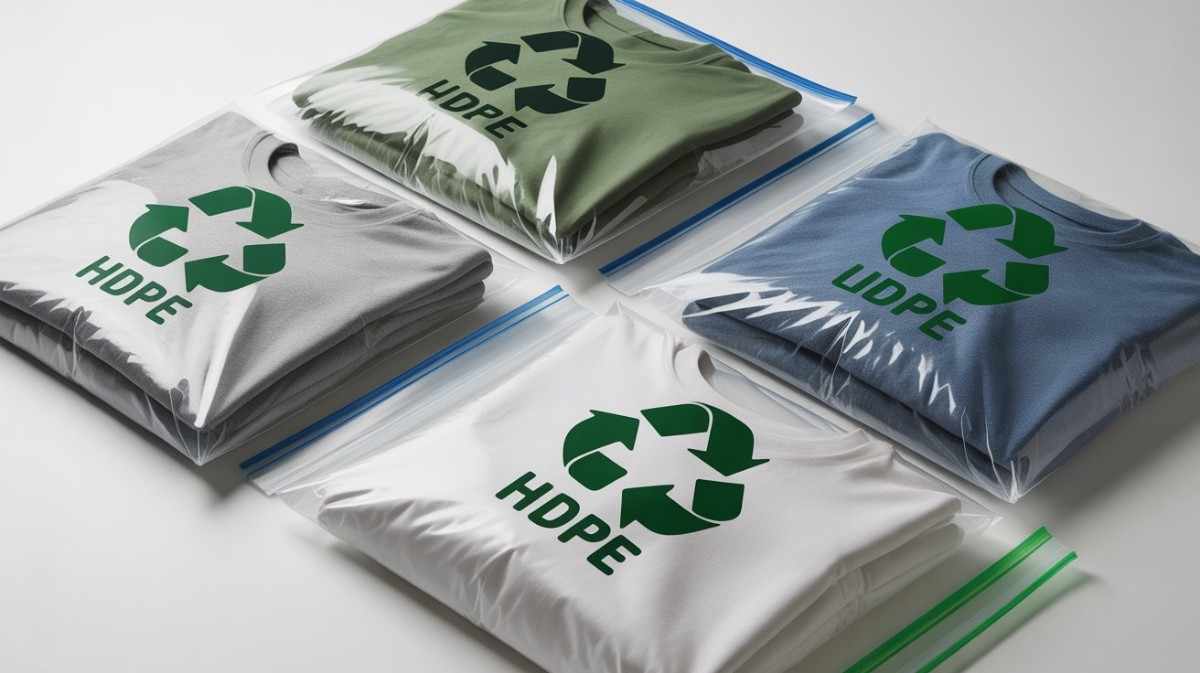
Plastic bags for T shirts: HDPE and LDPE bags are recyclable if clean; printed, multi-layer, or dirty bags are not. Dispose responsibly.

What Are Plastic Bags for T Shirts?
- Protection: Plastic bags for T shirts keep garments safe from dust, dirt, and moisture during storage or transport.
- Material: Typically made from HDPE or LDPE, offering durability while being lightweight.
- Display & Branding: Many bags come in clear or custom-printed designs, helping brands showcase their products.
- Recyclability: Not all T shirt bags are recyclable; knowing which are helps reduce waste.
- Sustainability: Using recyclable bags supports eco-friendly packaging and responsible consumer choices.
Key Materials Used in T Shirt Plastic Bags
| Material | Characteristics | Best Use | Recyclability |
|---|---|---|---|
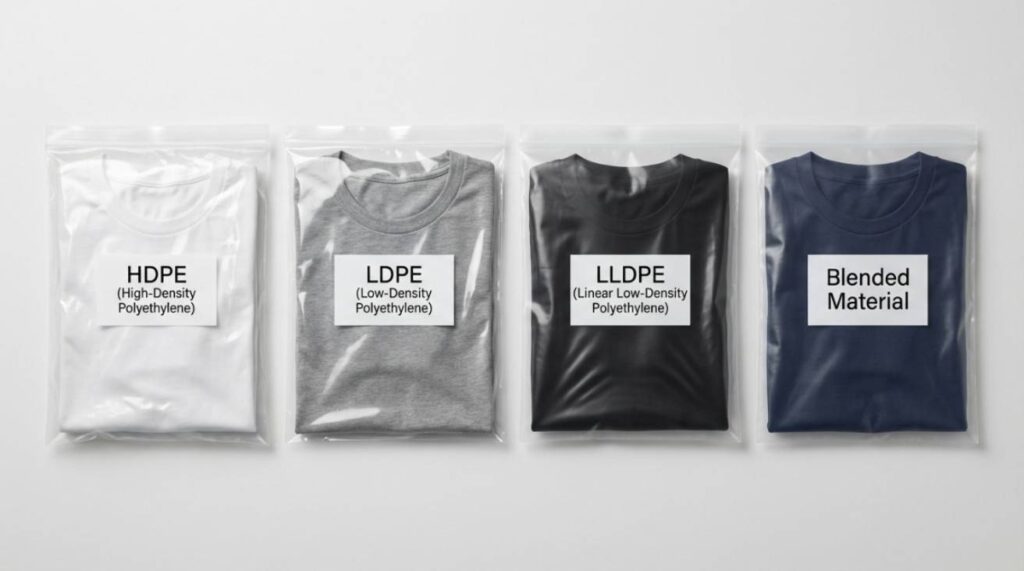
| HDPE (High-Density Polyethylene) | Strong, lightweight, tear-resistant | Bulk shipments, heavy T shirts | Widely recyclable if clean |
| LDPE (Low-Density Polyethylene) | Soft, flexible, smooth | Retail packaging, presentation | Recyclable depending on local facilities |
| LLDPE (Linear Low-Density Polyethylene) | Extra tear resistance, stretchable | Heavy-duty bags, shipping | Follow local recycling rules |
| Blended Materials | Mixed plastics for extra strength | Specialty or custom T shirt bags | Often not accepted in curbside recycling |
Features to Consider When Buying
- Strength & Sustainability: Pick plastic bags for T shirts that last and are easy to recycle.
- Thickness (microns): Determines strength, preventing tears during shipping or handling.
- Size & Fit: Protect folded T shirts without generating excess plastic waste.
- Handles & Closures: Resealable zippers or die-cut handles improve use but may limit recycling.
- Custom Printing & Branding: Enhances product presentation, though inks or adhesives can impact recycling.
- Material, Thickness & Design: Selecting the right combination ensures bags are functional, sustainable, and eco-friendly.
Types of Plastic T Shirt Bags and Their Recyclability
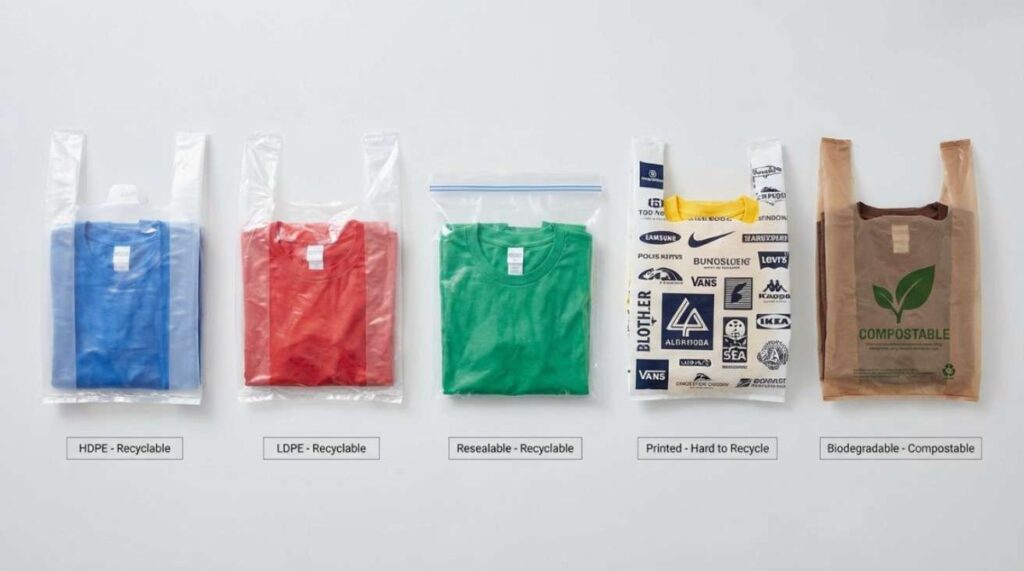
- Clear Single-Layer Bags: HDPE or LDPE bags are the most recyclable when kept clean and dry.
- Resealable or Zipper Bags: Provide extra protection but are harder to recycle due to mixed materials.
- Printed or Branded Bags: Heavy inks or coatings can reduce recyclability.
- Biodegradable or Compostable Bags: Designed to break down faster but often require specific disposal conditions.
- Responsible Disposal: Knowing the T shirt bag type helps decide whether to recycle, reuse, or dispose of it properly.
How to Tell If Plastic Bags for T Shirts Can Be Recycled
- Check the Label or Symbol: Look for the material label or recycling symbol on the bag.
- Recycling Codes: HDPE (#2) and LDPE (#4) T shirt bags are recyclable if free of dirt and moisture.
- Avoid Mixed Materials: Do not recycle bags with adhesives, heavy printing, zipper seals, or multiple layers.
- Bag Condition: Heavily soiled, torn, or mixed-material bags should not be recycled.
- Local Guidelines: When unsure, always follow local recycling guidelines to ensure proper disposal.
What Plastic Bags for T Shirts Cannot Be Recycled
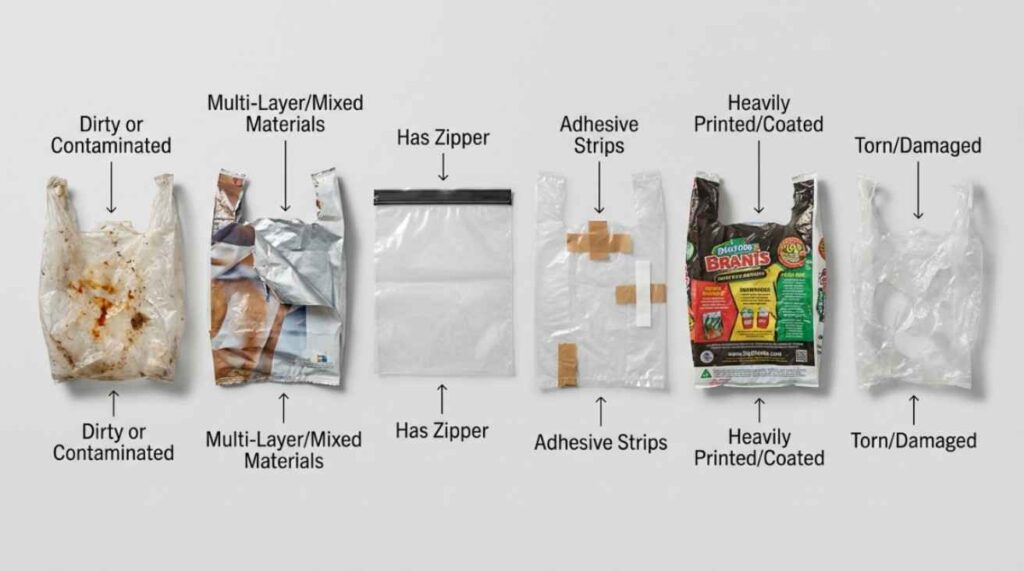
- Dirty or Contaminated Bags: Bags with food, oil, or moisture residue cannot be recycled.
- Multi-Layer or Mixed-Material Bags: T shirt bags made from different plastic layers or combined materials are difficult to process.
- Bags with Zippers or Adhesive Strips: These parts interfere with recycling systems.
- Heavily Printed or Coated Bags: Thick inks, dyes, or glossy coatings reduce recyclability.
- Torn or Damaged Bags: Severely damaged plastic loses recycling value.
- Responsible Disposal: Knowing which T shirt bags cannot be recycled prevents contamination and supports effective recycling efforts.
Better Recycling & Disposal Tips for T Shirt Bags
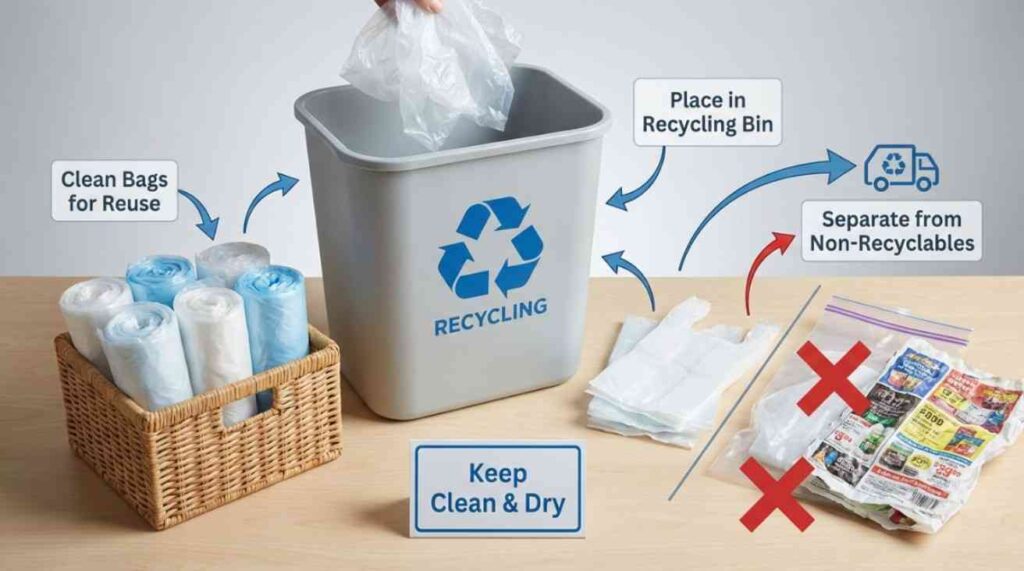
- Reuse Before Recycling: Use T shirt bags for storage, packing, or bin liners to extend their use.
- Keep Bags Clean and Dry: Only clean, dry plastic bags for T shirts should go for recycling.
- Remove Non-Recyclable Parts: Detach labels, adhesive strips, or closures when possible.
- Use Store Drop-Off Locations: Many recycling centers accept plastic bags separately from curbside bins.
- Choose Recyclable Materials: Select HDPE or LDPE T shirt bags with minimal printing.
- Environmental Benefit: These small steps help increase recycling rates and reduce environmental impact.
FAQ-About Plastic Bags for T Shirts
- Can plastic bags for T shirts be recycled at home?
Some HDPE or LDPE T shirt bags are recyclable, but most curbside programs do not accept them. Store drop-off recycling points are usually recommended. - Are clear T shirt bags more recyclable than printed ones?
Yes. Clear, single-layer plastic bags are easier to recycle because they contain fewer inks or coatings. - Do biodegradable T shirt bags go in recycling bins?
No. Biodegradable or compostable T shirt bags need special disposal conditions and should not be mixed with regular recycling. - What happens if non-recyclable bags are recycled by mistake?
They can contaminate recycling streams, causing entire batches to be rejected. - Is reusing plastic T shirt bags better than recycling?
Yes. Reusing plastic bags for T shirts extends their lifespan and helps reduce overall plastic waste.
Final Thoughts-on Recycling Plastic Bags for T Shirts
- Widespread Use: Plastic bags for T shirts are widely used, but their environmental impact depends on how they are handled after use.
- Recyclability Awareness: Understanding which T shirt bags are recyclable helps reduce waste and prevent recycling contamination.
- Best Recycling Options: Clean HDPE and LDPE T shirt bags provide the best recycling potential.
- Bags to Avoid: Mixed materials, heavy printing, and added closures should be avoided.
- Better Alternatives: When recycling isn’t possible, reuse and responsible disposal are better options.
- Sustainability Impact: Informed choices help businesses and consumers manage T shirt bags responsibly and support long-term sustainability.