
Learn 7 crucial facts about disposable bags, their environmental impact, plastic pollution, and smart sustainable alternatives to cut waste effectively.
Introduction
Disposable bags are single-use carriers commonly used for shopping, packaging, or waste management. Widely found in grocery stores, retail outlets, and homes, they offer convenience, affordability, and versatility. However, their extensive use leads to plastic pollution, landfill overflow, and threats to wildlife. Increasingly, governments are enforcing plastic bag regulations and promoting eco-friendly alternatives. Understanding the types, uses, and environmental impact of disposable bags empowers individuals and businesses to make sustainable choices while maintaining practicality.
Common Types of Disposable Bags
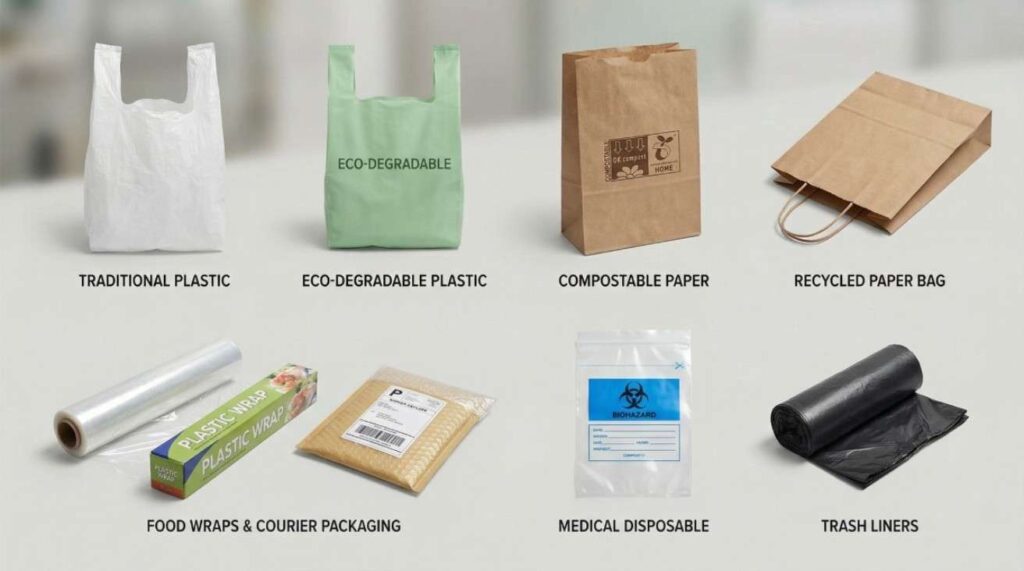
| Type of Disposable Bags | Description | Key Points / Impact |
|---|---|---|
| Plastic Bags | Cost-effective and lightweight, making them a common choice for retail and grocery use. | A significant factor in the growing plastic waste problem. |
| Eco-degradable and compost-friendly bags | Produced using plant-derived materials or enhanced plastic blends. | Break down naturally, sustainable alternative |
| Paper Bags | Eco-friendly option for shopping and packaging | Production uses trees, water, and energy |
| Specialty Bags | Includes food wraps, courier bags, medical disposable bags, and trash liners | Designed for specific household or commercial needs |
Advantages of Disposable Bags
Despite environmental concerns, disposable bags offer clear benefit
- Convenience & Accessibility: Lightweight, affordable, and widely available, ideal for everyday errands.
- Clean and safe handling, ideal for food use, healthcare needs, and waste management.
- Versatility: Suitable for groceries, shopping, storage, and transporting items.
Using disposable bags responsibly allows individuals and businesses to retain functionality while reducing environmental impact, combining practicality with sustainable consumption.

Environmental Impact of Disposable Bags
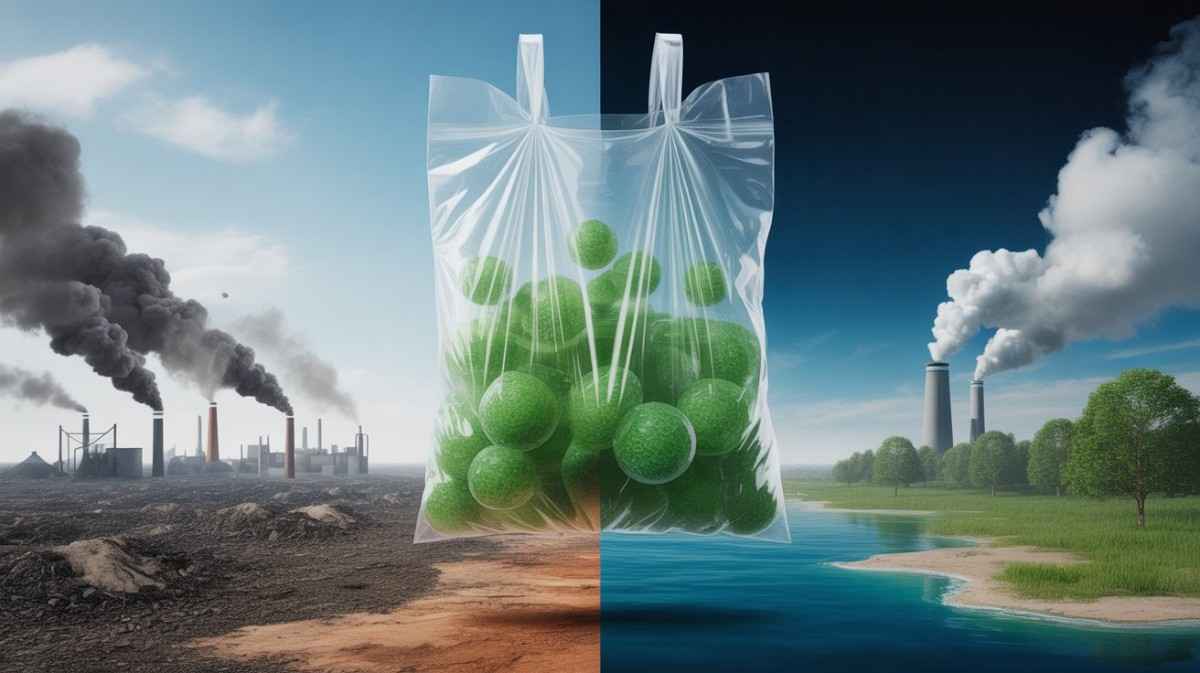
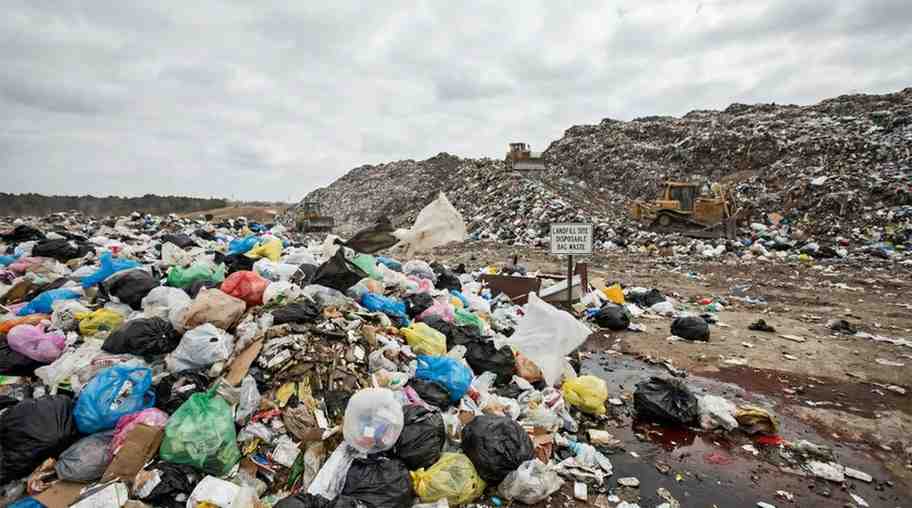
Plastic Pollution: Most bags take centuries to decompose, causing persistent waste buildup.
- Microplastics: Degraded particles contaminate soil and water, affecting ecosystems and human health.
- Wildlife Risks: Birds, fish, and marine animals may ingest or become entangled, leading to injury or death.
- Landfill & Pollution: Discarded bags clog waterways, overflow landfills, and emit greenhouse gases during decomposition.
Implementing plastic bag bans and promoting reusable alternatives are key steps to minimize ecological damage while supporting sustainable practices.
Sustainable Alternatives
Reducing reliance on disposable bags protects the environment and encourages sustainable living:
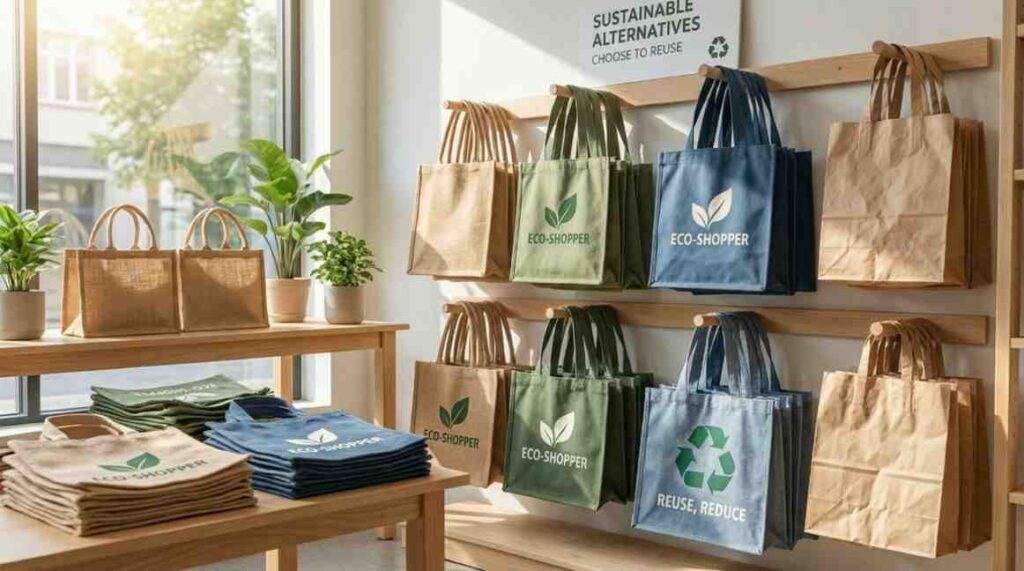
- Reusable Bags: Made from cotton, canvas, jute, or recycled PET, they last longer and cut single-use plastic waste.
- Biodegradable & Compostable Bags: Decompose naturally under proper conditions, minimizing plastic pollution.
- Paper or Plant-Based Bags: Lower plastic use, though production requires resources.
- Zero-Waste Practices: Foster habit changes that reduce dependence on single-use plastics, supporting a greener lifestyle.
Life Cycle of Disposable Bags: Understanding the True Environmental Impact
Understanding the life cycle of disposable bags helps consumers and businesses see the real environmental cost beyond just “plastic vs biodegradable.” Below is a step-by-step flow with arrows to illustrate the journey:
Raw Material Extraction → Production → Distribution → Use → Disposal / Recycling / Composting
- Plastic Bags → Low production cost, lightweight, long-lasting, but slow decomposition and high plastic pollution risk.
- Paper Bags → Made from trees, biodegradable, but high energy and water use during production.
- Biodegradable / Compostable Bags → Plant-based, break down only under proper industrial composting conditions; otherwise, may contribute to microplastic pollution.
Key Insight: The true environmental impact of disposable bags depends on reuse frequency, disposal method, and local recycling infrastructure. Choosing eco-friendly alternatives without proper handling may not reduce ecological harm.

FAQs About Disposable Bags
Q1: Are disposable bags recyclable?
Some can be recycled at designated drop-off points, but most curbside programs do not accept them.
Q2: What are the best alternatives?
Reusable tote bags, jute or cotton bags, and biodegradable options are eco-friendly choices.
Q3: Do biodegradable bags fully degrade?
Only under proper conditions; otherwise, they may persist.
Q4: How do disposable bags affect wildlife?
Birds, fish, and marine animals may ingest or get entangled, emphasizing correct disposal.
Q5: How can I reduce disposable bag use?
Carry reusable bags, reuse disposable ones, and choose eco-friendly alternatives.
Conclusion
Disposable bags are practical, but their environmental impact is significant. Choosing reusable, biodegradable, or compostable options, practicing proper disposal, and adopting zero-waste habits reduces their ecological footprint. By embracing sustainable packaging and eco-conscious shopping, consumers and businesses can protect wildlife, cut plastic pollution, and contribute to a cleaner, greener planet.