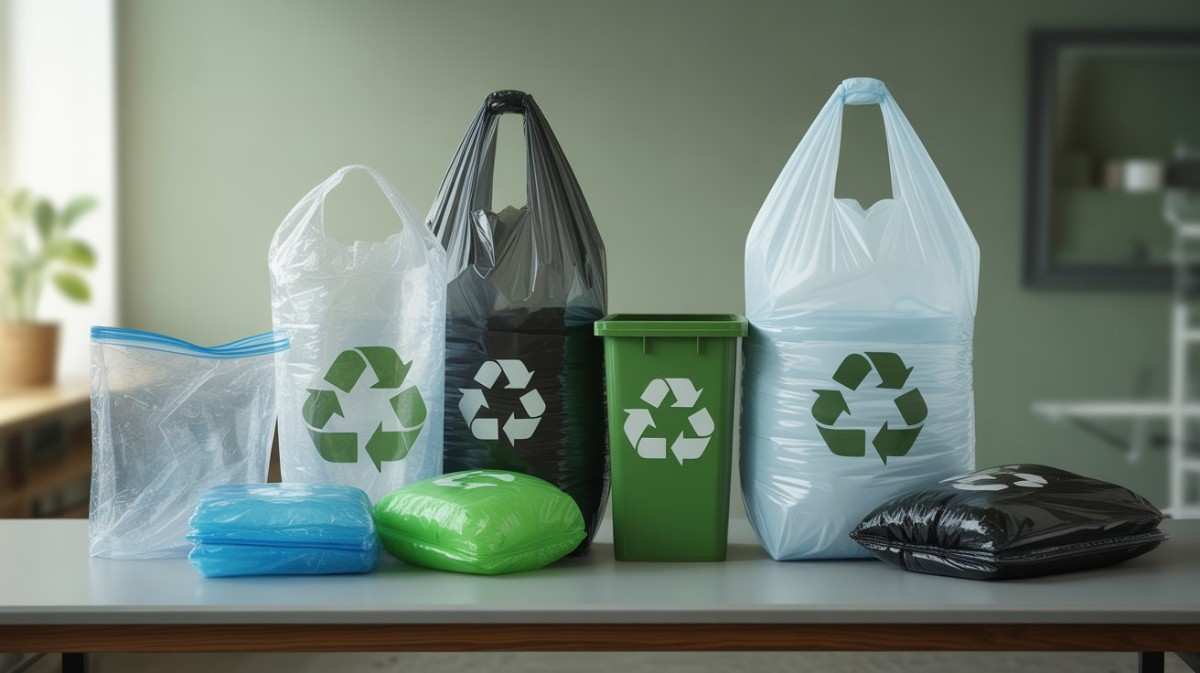

Clothing plastic bags protect garments from dust, moisture, and damage while offering eco-friendly storage options for safe and organized apparel.
Clothing plastic bags are protective packaging solutions designed to keep garments safe from dust, moisture, and handling damage during storage, transportation, retail display, and e-commerce delivery. These plastic bags for clothes help preserve garment quality, hygiene, and presentation across the global apparel supply chain.
Types of Clothing Plastic Bags
| Type of Clothing Plastic Bags | Usage / Features | Common Applications |
|---|---|---|
| Clear Plastic Bags | Easy garment identification without opening | Retail stores, warehouses |
| Hanging Garment Bags | Dust-proof, moisture-resistant protection | Closets, boutiques, dry-cleaning services |
| Clothing Poly Bags | Adhesive flaps, resealable closures, or ventilation holes to prevent moisture | Factories, e-commerce fulfillment centers |
| Reusable Garment Covers | Long-term storage, eco-friendly, sustainable packaging | Homes, storage, sustainable packaging solutions |

What Are Clothing Plastic Bags?
- Specially Designed Protection: Clothing plastic bags are protective coverings made for apparel packaging and safety.
- Garment-Specific Features: Unlike ordinary bags, they ensure fabric safety, moisture resistance, and clear visibility.
- Wide Usage: Used by fashion brands, apparel manufacturers, dry cleaners, retailers, and e-commerce businesses.
- Purpose: Keeps clothing clean, organized, and protected during manufacturing, warehousing, shipping, and retail handling.
- Types:
- Plastic Garment Bags: For hanging clothes like suits, dresses, and coats.
- Clothing Poly Bags: For folded garments such as shirts, jeans, and knitwear.
- Importance: Both types are essential packaging solutions across the fashion industry.
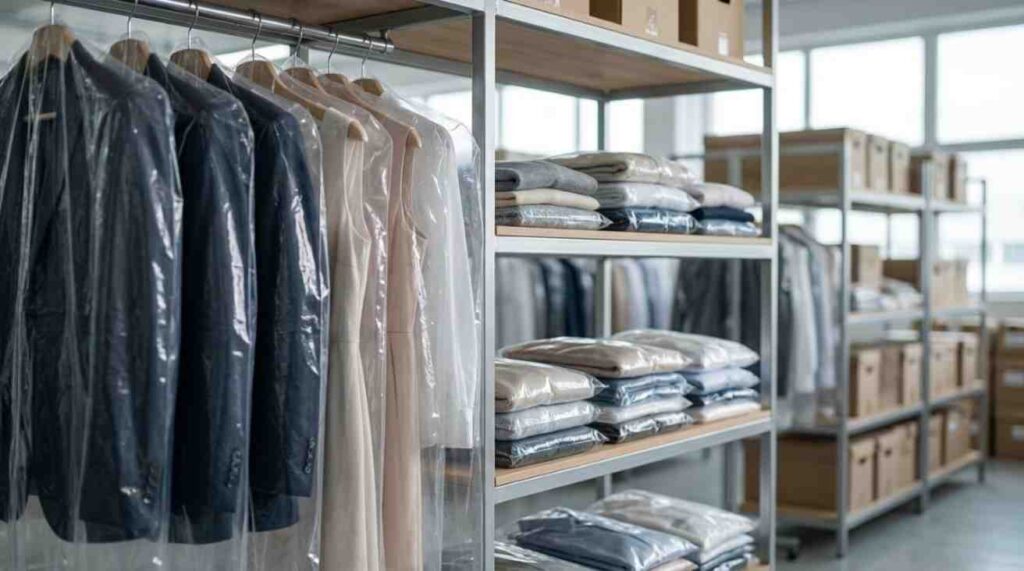
Uses and Benefits of Clothing Plastic Bags
| Use / Benefit | Description |
|---|---|
| Reliable Protection | Shields garments from dust, humidity, stains, and damage during storage and transportation. |
| Enhanced Efficiency | Keeps clothes neatly folded, easier to sort, and faster to scan, reducing errors and returns. |
| E-commerce Advantage | Ensures garments arrive clean, presentable, and hygienic, improving customer satisfaction and maintaining quality standards. |
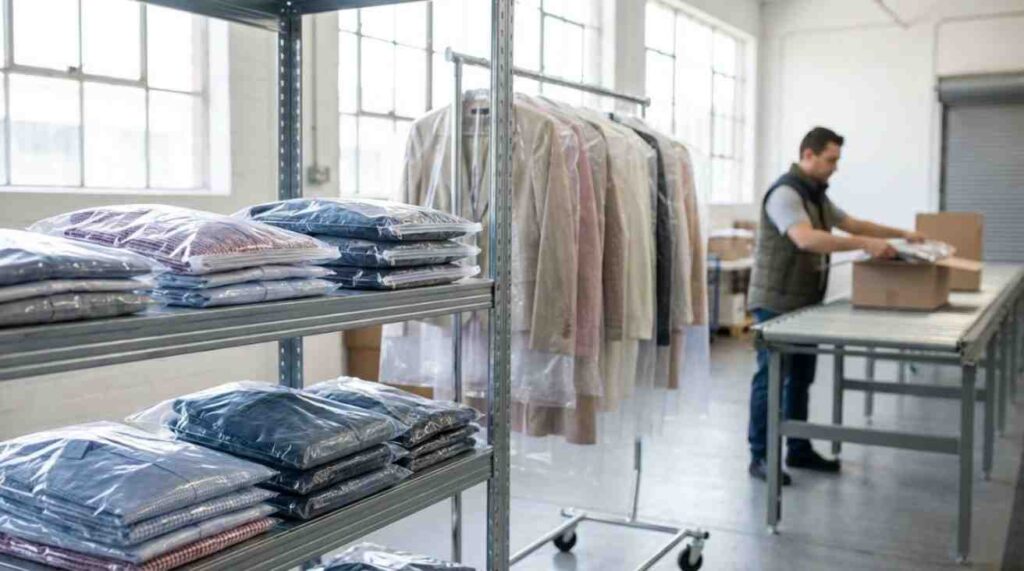
How to Maintain and Reuse Clothing Plastic Bags
Proper care of clothing plastic bags protects garments and supports sustainable packaging. Follow these tips:
- Clean regularly: Wash reusable garment covers or poly bags with mild soap and warm water, then air dry completely.
- Store carefully: Fold or hang bags in a cool, dry place away from sunlight.
- Reuse effectively: Use clothing plastic bags multiple times for storage, shipping, or organizing wardrobes.
- Avoid overstuffing or sharp items to prevent tearing.
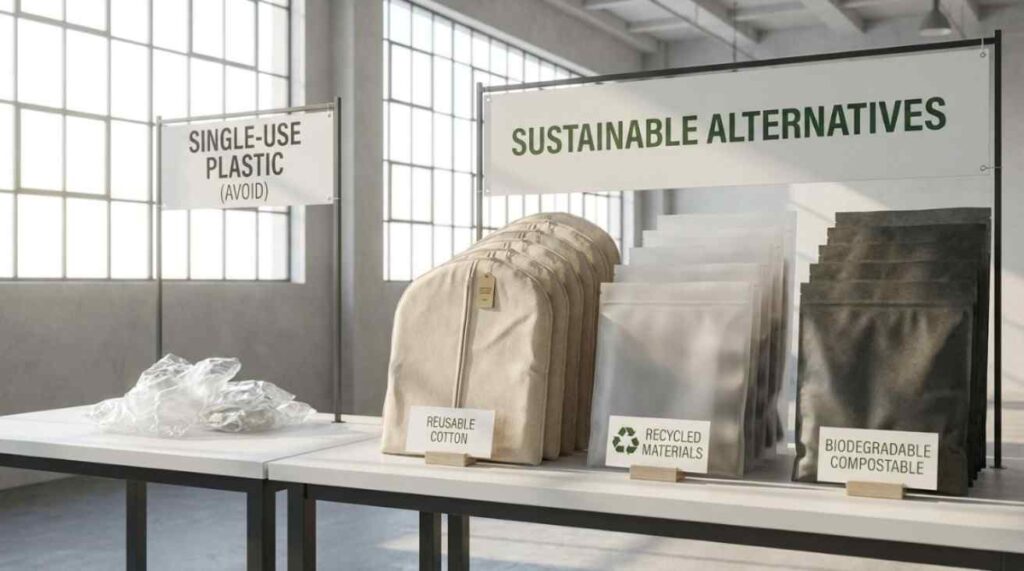
- Choose eco-friendly options like reusable, recycled, or biodegradable bags.
These steps keep clothing plastic bags durable, protective, and environmentally friendly.

Environmental Impact and Sustainable Options
- Plastic Waste: Single-use clothing plastic bags contribute to growing plastic pollution in the fashion industry.
- Eco-Friendly Bags: Several brands offer recyclable or recycled poly and garment bags.
- Reusable Alternatives: Durable reusable clothing plastic bags reduce waste and support sustainable packaging.
- Biodegradable Options: Some companies adopt biodegradable bags, balancing eco-friendliness with durability and cost.
How to Choose the Right Clothing Plastic Bags
- Garment Type: Lightweight poly bags suit folded apparel; thicker garment bags are best for hanging clothes.
- Storage Duration: Select bags based on storage time for maximum protection and durability.
- Visibility: Clear bags allow easy identification of garments.
- Sustainable Choice: Reusable bags support long-term storage and eco-friendly branding.
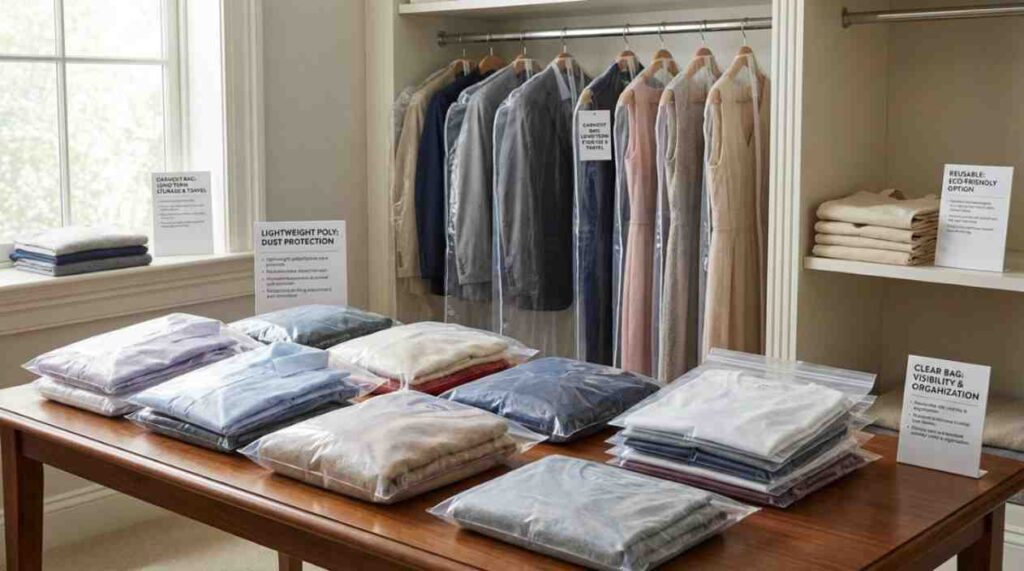
Seasonal & Storage Tips for Clothing Plastic Bags
Using clothing plastic bags properly protects garments and keeps wardrobes organized year-round.
- Sort by season: Separate summer, winter, or special occasion clothes before storage.
- Use clear or breathable bags: Clear plastic clothing bags help identify items, breathable options prevent moisture.
- Label bags: Mark season or garment type for easy access and organization.
- Store in a cool, dry place: Protect fabrics and garment plastic covers from sunlight or dampness.
- Rotate bags seasonally: Clothing poly bags and reusable covers last longer with proper rotation.
These tips ensure garments stay protected, organized, and eco-friendly.

FAQs About Clothing Plastic Bags
Q1: What are clothing plastic bags used for?
They protect garments during storage, shipping, and retail display.
Q2: Are clothing plastic bags recyclable?
Some bags made from LDPE or HDPE are recyclable, depending on local facilities.
Q3: Are plastic garment bags safe for storage?
Suitable for short- and medium-term storage; breathable options are better for long-term use.
Conclusion
Clothing plastic bags are essential for protecting garments, improving handling efficiency, and maintaining presentation. Used responsibly with recyclable or reusable options, they remain a practical and effective apparel packaging solution.